Thursday, January 30, 2014
Or maybe it's re-rope sash, or restring windows, or re-weight with sash cord? No matter, sit back, buckle in, and get ready for a riveting blog post about restoring antique windows! I doesn't get much more exciting. (I'm lying, it can only get more exciting.)
Antique double hung windows are beautiful, there's no doubt about it. I didn't realize this for many years, but after buying our home and falling in love with old homes, the old sash are one of the four truly enchanting elements of architecture I feel set an older home apart from the pack (the other three are their staircases, period doors & door hardware, and moulding/millwork). When I'm drooling over a magazine house, a real estate listing that I can't afford, or a falling down house with "good bones" I just wish I could spend another decade saving, these are some of the primary aspects I immediately look for. And if any of these homes are lacking any or all of these details...they're dead to me.
While I'm an equal opportunity lover of old windows, the majority of my restoration efforts are geared toward the style of windows in our home -- rope and pulley double hung sash. This is primarily because they're the ones with which I'm most familiar and comfortable.
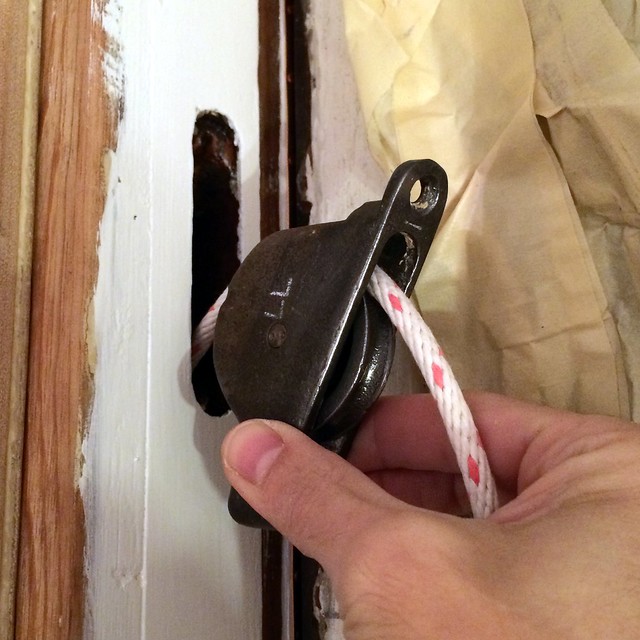
Our style of windows are actually very common in the era of our 1880s home, and in about 50 years in either direction. The style is fairly straight forward and contains two sash, an upper and lower, which are movable and counter balanced by large weights that live in cavities beyond the jambs of the window frame. When the sash are raised or lowered, the sash weights, attached to the sash by cording, travel up and down in the hollow channels, allowing the windows to stay open without any other props or stays. It's a very functional system that works quite well. However, one of the common plights of the rope and pulley double hung sash comes by way of frayed and broken ropes (or sash cord).
After years of use and abuse, these weight cords begin to wear away. They're often painted by careless contractors, snagged by nails or hangers added in incorrect places, rotted by moisture, or just plain pulled on by one too many people. After they've had enough, they give up.
 Continue Reading Full Post

