With our annual Halloween party looming, I was racking my brain to come up with a fun and creative party favor that could top...or at least compete with last year's Halloween S'mores party favors

I mulled it over, perused hundreds of photos on Pinterest, looked through my library of Halloween books and old issues of Martha Stewart magazines, but came up with nothing. I didn't find anything that made me excited about celebrating my favorite event of the year. That is, until I started to get really hungry one day last week while shopping for our week's groceries. You know how you're not supposed to go to the grocery store when you're hungry? Well, if you're ever trying to come up with a tasty and fun party favor, the opposite is true -- hunger gets the ideas flowing. Seems I developed a bit of a craving for that childhood favorite of mine, Oreos.

My idea was simple, and hopefully effective. Since offering my guests a handful of Oreo cookies wouldn't quite make the grade (though they're undeniably delicious on their own), I decided I could pump it up a little by adding a bit of chocolate to the mix.


Continue Reading Full Post
Comments 3

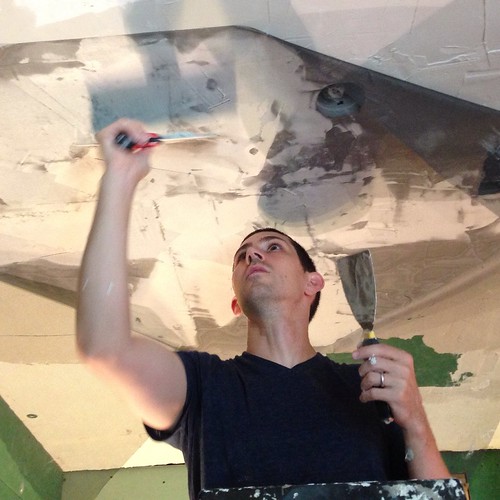
Plaster. This single, solitary word in the old house vernacular elicits a visceral reaction of sorts in many people. It's a characteristic trait of buildings from 60 years to much much older that embodies the true nature of love/hate relationships among DIYers, renovators, preservationists, rehabilitators, flippers, home inspectors, and pretty much anyone who has every worked with the stuff. But interestingly enough, where any one of those people falls in proximity to the seemingly moral thin red line of "rip it out" versus "repair, don't replace," well, that's all based on the relationship you've developed with the walls and ceilings of the past.

When we moved into our house we had been indoctrinated by countless television shows and contractor horror stories in dealing with the fragile, crumbling, dusty, and gritty mess that tends to represent old fashioned plaster. And I'm not going to lie. When we started to think about our home renovation plans, the initial thoughts that our cracked, bumpy, and crumbling plaster was "too far gone" and the belief that we'd need to "gut every room" entered into our conversations quite frequently. But that was before we understood. Before we knew better. Before we shook off the propaganda I'm rather certain started with the gypsum board industry, much the same way vinyl window salesman have long peddled the theory that a home's 100+ year old windows should certainly be removed in favor of energy efficient gems that cost a pantload and "should last a good 30 years." Oh, what a bargain...right?
North by Northside, Jeff SkrenesNorth by Northside, Jeff Skrenes

In reality, when you hear the phase "that house has good bones," it's giving a sense of humanity to a building. The bones are represented by the framing and structural items, but one needs more than "good bones" to have a human who is worth anything. In an old home let's be sure to look past the "bones" and see that the plumbing is the circulatory system, the electrical is the nervous system, windows are the eyes, HVAC is the respiratory system, and the plaster and lath walls covering most interior surfaces, well, that plaster is your home's skin. And we all know that the skin is the single most important organ the body owns.

Continue Reading Full Post
Comments 27

Deferred maintenance is the pits. This is especially true when that deferred maintenance is needed on something you already hate and want to replace, but you've not gotten to that point in your project list. And deferred maintenance is the absolute worst when the fact you've deferred it, even on something you'll ultimately replace, ends up affecting another project you've already completed. Such is the case with a little piece of deferred maintenance I undertook in the middle of last week.

It wasn't too many years ago that we did a quick spruce up on our family room. Though it wasn't an "end all, be all" type of project, we wanted to make the room look nice and loved until we are able to really tear into it years from now.

As part of this project, we fixed up some bubbling plaster here and there, as there was no evidence of active leaking. Thinking all was good and well, we lived our lives and enjoyed the room.

Then, just a short months ago, I was looking around the room and noticed an issue. It seemed there were some new cracks and a bit of softened and bubbling plaster that had appeared beneath the windows.

UGH!!!

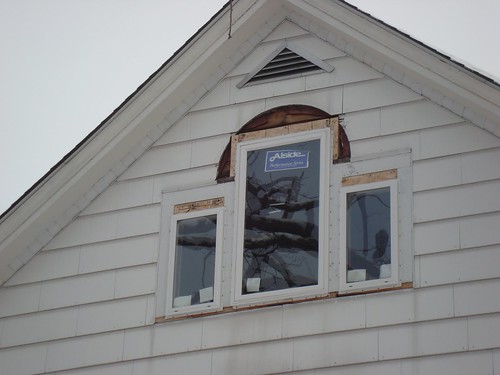
I thought we didn't need to deal with this sort of thing. I was obviously wrong. I took a little trip outside and noticed the primary issue. The window sills in the 1950's replacement windows—the windows that are neither the correct size, style, or quality for our home—had apparently begun rotting away. To make matters worse, the paint and caulk where the sills meet the house had cracked, and were now allowing water infiltration every time it rained.


Continue Reading Full Post
Comments 15

Dust collection is easily one of the single biggest challenge when keeping an avid DIYer's shop or workspace at a level cleanliness that is at least somewhat respectable. If you've ever had a woodworking or sanding project in your makeshift shop or workspace, you know the possible disaster that seems to form from what can even feel like a small task. Cut a board or two, maybe sand some wood, and before you know it, mounds of chips and dust litter your work area's floor.

Professional shops and people that I'd safely qualify as "less hobbyists and more diehards" often have beautifully complex, expensive, and integrated multi-phase dust collection systems, made up of interconnected tubes, intersections, shutoff ports, collection cylinders, and a centralized dust collection mechanism. These are large, impressive, and unrealistic for most.

A massive and custom dust collection system by WHESCO Group

Personally, I've got my eye on a particular Delta dust collection unit that I'd love to make my "shop" home to, but I have neither the space in our existing cramped basement, or the critical spousal buy in at this time to make it a reality. One day, many years from now, when I might perhaps have a respectable wood shop, I'll surely have a bang up system with integrated dust collection all over the place, but until that day, I need to make something else work.


Continue Reading Full Post
Comments 5

What would you say if I told you an authentic Medieval walled city still exists? One with roots as far back as the 10th century. One where ramparts of over a mile long still stand, poised to protect the village from an unexpected onslaught. One where a night watchman still roams the streets just after sunset, patrolling and sharing his stories of the town. One where ancient torture devices and executioners’ implements are still proudly displayed. And most importantly, one where the classical architecture that is the fingerprint of such a city is still as intact as the days each of the buildings were constructed. What would you say if I told you that Wendy and I had the good fortune to visit just such as city, and it was everything we’d hoped it would be? But before we get to that, let me fill you in on our how we experienced a journey that ultimately led to a crescendo of an amazing adventure.

As part of our whirlwind Bavarian adventure Wendy and I opted to drive a large part of the Romatiche Straße, or the Romantic Road. We actually started our journey at the “end” of the Romantic Road in Füssen, just a stone’s throw from our stop at Neuschwanstein Castle and only a few kilometers north of Germany’s border with Austria. There’s actually a small arch that marks the “official” end of the road said to mark the typical path of journey during the Roman Empire (but really created as a 1950's tourism marketing campaign).

This was a perfect approach to this journey, in our opinion, and I’ll tell you why at the end of the post.

The village of Füssen was our first foray into the picturesque view of Bavarian Medieval cities, and what an amazing first experience it was. The town, originally settled during Roman times with modern architecture dating back to the 8th century, is both a bustling tourist destination and is known for its violin making.

Füssen is situated on the Lech River, which affords beautiful views of the Alps along walking paths, streets, and cobbled sidewalks of this densely packed town. If you’re ever in the area, it is absolutely worth a stop.


Continue Reading Full Post
Comments 14
  • Search

  • Login
  • Follow
  • Advertising

If you're looking for information on advertising and sponsorships, head on over to our sponsorships page. You can purchase site sponsorships in a few easy clicks. 

Toolbox Tuesday
Open Housing
  • We're Featured!

Old Town Home has been featured in the following places and publications:

The Washington Post
 
Washingtonian Magazine
 
Domino
 
Old House Journal
 
 
Apartment Therapy House Tour
 
Washington Post Express Feature
 
Home & Garden Blogs
 
© 2025 OldTownHome.com. - Privacy Policy

Unexpected Error

Your submission caused an unexpected error. You can try your request again, but if you continue to experience problems, please contact the administrator.

Working...

Working...