Renovating an old house can be quite a bit of fun. It's also true that it can be tedious, trying, difficult, frustrating, and downright infuriating, but most of those moments fall by the wayside when you're able to look at what you've accomplished in a finished project and take pride in the fact that you were able to do it yourself and overcome some of the challenges that presented themselves along the way.
One of the single biggest challenges when considering DIY home improvement is actually not the lack of skills you have as an amateur, but more typically it's the lack of knowledge pertaining to where you can find good quality and reasonably priced materials. It's not an aspect of home renovation I initially considered when beginning our journey, but it's a fact that Wendy and I both learned very quickly. For most DIY homeowners, this does not come as a surprise and will most likely be met with quite a few head nods.
With the rather recent introduction (we're talking the last 20-30 years) of "big box stores" like Lowes and Home Depot, many people feel, and the marketing would lead you to believe, that they have pretty much everything you need in the way of materials to do any project. The reality is that they typically have the basics to help you get started, but you'll need to find alternate sources for quite a few materials in order to ensure a high quality finished result. Add to it that the big box stores don't typically carry some of the more specialized products you'll end up needing, especially those that old house enthusiasts such as us require to work on our house. I mean, I wouldn't ever expect to find plaster buttons or lime based mortar anywhere in the aisles of a big box, it just doesn't make financial sense for them.
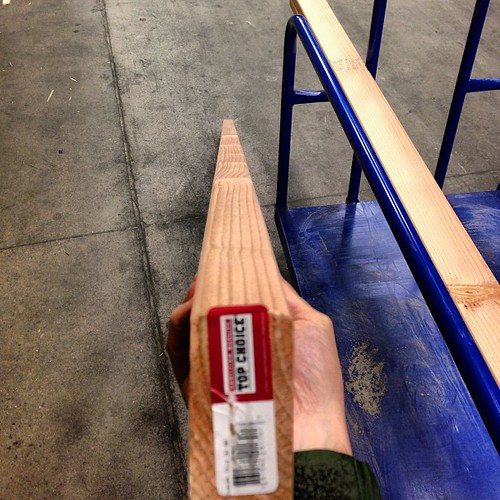
One of the aspects of materials acquisition that's been particularly challenging for us is the location of high quality and reasonably priced lumber. If you've been through the aisles of the big boxes you know that the lumber available is often either not of top quality, or it's been thoroughly picked over, leaving warped or damaged boards that you must pick through yourself to find something the meets your needs. This isn't as much of a concern when you're searching for framing lumber, but if you're working on something that has a finished face that you plan to stain or paint (like our office desk), it has the potential to ruin your project.
Finding that perfectly straight, undamaged, and correct species board in a big box can sometimes feel like searching for a unicorn or leprechaun. Perhaps this is why I hoard my wood scraps in the basement. When I find something good and have a little left over, it truly brings pain to my heart if it isn't eventually put to use.
 Continue Reading Full Post

