Ah, the joys of a massive project undertaking. Though most major projects come with long hours, new skills, and inevitable wedded bliss (wink wink, nudge nudge), the joy I'm talking about is my mantra! My credo! My rule to live a DIY life by! It's been a while since I repeated the words I should practically have tattooed on my arm, so I'll give you a refresher.

There's no better way to help a project progress, to help your tool collection grow, and to ease the financial burden of packing your workshop full of the necessary tools for future projects than by following this one simple rule. Obviously this has its limits, and once you have enough projects under your belt, it will get much more difficult to find tools you really need, but I guarantee it will take you at least a few years after you embark on your first DIY project before you hit your tool saturation point.

Hey! If you don't follow this rule you'll never get your workshop to the point where it looks like a post-apocalyptic wasteland.

When looking at our list of three items to accomplish before really getting going on our siding repair/replacement project, item #2 provided me with an excellent opportunity to embrace this credo as an excuse to justify the purchase of the tools necessary to re-side our home. As a reminder, here's the list of things we needed solutions for prior to really getting into the mad swing of things.


Continue Reading Full Post
Comments 4

Last week we introduced you to a major undertaking we had to tackle after the extensive water and termite damage we discovered in our kitchen. The water infiltration, poorly installed and poor quality siding, the shoddy and unsightly architectural element attached to our home, and the failure to remove prior coverings before applying new siding left us with the need to reside the entire wood frame addition on our home. 

After covering our rotted and leaking siding in duct tape as a temporary fix while we determined our next steps, we launched into the massive research effort necessary to determine our best course of action. There were three items we had to determine.

Today I'll cover the first item on this list, as it turned out to be a project in and of itself.


Continue Reading Full Post
Comments 13

Whenever we get ourselves into the throws of summer heat, I'm reminded of the DIY siding project we did some time ago that stands as one of our personal "turning points of DIY." If you're equally as ridiculous as we sometimes are in thinking we can handle home improvement items, you may be familiar with the feeling where you come into a project not entirely sure if or how you might be able to handle the job, but on the backside of the hopefully successful project you come away feeling like you can pretty much tackle anything.

While both Wendy and I had similar but distinct moments of panic during this project, wondering why we had taken on far more than we felt capable of, we resorted to the "put one foot in front of the other" methodology in an attempt to calm our fears when we were ready to lose our minds. This is one of those projects where we truly felt we may have bitten off more than we could chew, but in the end we realized we could really accomplish an awful lot in the realm of home improvement. The key here was to take a pretty significant step outside of our comfort zone and just hope it all turned out okay in the end.

If you remember way back to the period shortly after we moved into our house, we discovered some pretty serious termite damage in the wall between our kitchen and sun porch. This termite damage led to a major effort to remove a wall in the kitchen, and ultimately to completely renovate much of the interior kitchen space. Talk about a giant can of worms opening with a tiny little leak.

The thing with this project is that it wasn't limited to just the interior of the house.

The back room of our house is a wood frame addition from roughly 1900. Through the years it was sided and re-sided several times, ultimately ending with a paperboard/masonite compressed clapboard siding that had a bead detail running along the bottom of each board.


Continue Reading Full Post
Comments 14

It almost goes without saying that there are a large number of truly old homes in the historic district of Old Town Alexandria. As a whole, Old Town represents one of the most densely packed areas in the country when it comes to homes on the National Register of Historic places. While the area represents an important pocket of history in the United States and was one of the first few Federally recognized historic districts, quite a few of the homes have moderate to major historic significance on their own. One such home, the Dr. James Craik house, is the focus of today's Around Old Town.

Simply put, this house is gorgeous. There's just no other way to put it. It's grand, elegant, towering, a classic 18th century townhouse mansion, and an example of a restoration effort not often seen in the early to mid 20th century when similarly dilapidated homes would have been demolished. Just look at the state the house had fallen into by roughly 1930.

However, missing window panes, crumbling mortar, and overgrowth of ivy could do nothing to quash the importance of this home, so efforts to restore it and the neighboring wood frame flounder home to the left have been undertaken at several points since that old photo.

But what's the significance of these two homes? One name can begin to paint a picture. 


Continue Reading Full Post
Comments 11

If there's one thing to know about me as a homeowner, it's that I'm paranoid of water. My fear of water, or at least of water running rampant in our home, stems from what's been drilled into my head over the years. Water is the enemy of structure, and when left unchecked, leaks or floods can destroy your home or your home's contents, potentially throwing your entire life into complete and utter chaos. Sensationalist enough for you? Perhaps, but just ask someone who's lived through it!

Just last week I told you all about how I fixed a leak on our roof. Months ago I told you all about the installation of a leak detection and water shut off system called the Water Cop. And during our time since we purchased our very old house we've dealt with various broken and clogged pipes, pinhole leaks in plumbing, water pouring from ceiling light fixtures, and even the occasional makeshift swimming pool in the basement, all of which we've taken care of on our own.


Flooded basement thanks to a neighbor's broken pipe. :-(

My goal, beyond simply fixing the leaks that arise in our home, is to either minimize the damage from potential leaks or to prevent their appearance altogether. Sometimes this feels like a losing battle, but I do feel like I'm making progress.

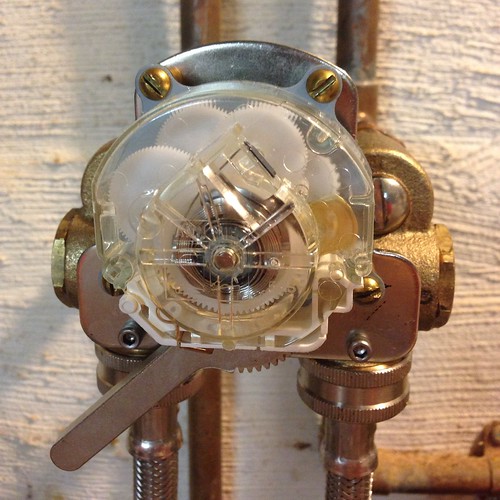
One of the single most common culprits for disastrous home flooding actually originates in an area of your home you use to clean your clothes, right behind your washing machine. Whether we're talking about a burst supply hose or a malfunction somewhere within the washing machine itself, a leak at the washing machine can run unchecked for hours or days, allowing thousands of gallons of water to flood and ruin your home and making it look like you were just hit by the Wet Bandits.

More sensationalism, eh? Does this paint a horrible enough picture for you? I've actually seen this occur first hand when my parent's second floor washing machine malfunctioned and their overflow drain clogged, allowing water to run into their walls and ceiling below. Tens of thousands of dollars of damage were done to their home, and the resulting inconvenience and effort necessary to clean up, repair, and ensure mold does not grow inside their walls was massive. Talk about a horrible but completely preventable scenario.

Continue Reading Full Post
Comments 5
  • Search

  • Login
  • Follow
  • Advertising

If you're looking for information on advertising and sponsorships, head on over to our sponsorships page. You can purchase site sponsorships in a few easy clicks. 

Toolbox Tuesday
Open Housing
  • We're Featured!

Old Town Home has been featured in the following places and publications:

The Washington Post
 
Washingtonian Magazine
 
Domino
 
Old House Journal
 
 
Apartment Therapy House Tour
 
Washington Post Express Feature
 
Home & Garden Blogs
 
© 2025 OldTownHome.com. - Privacy Policy
Login Below
or
Sign in with Facebook
Connect

Unexpected Error

Your submission caused an unexpected error. You can try your request again, but if you continue to experience problems, please contact the administrator.

Working...

Working...