<?xml version="1.0" encoding="utf-8"?>
<feed xmlns="http://www.w3.org/2005/Atom" xmlns:media="http://search.yahoo.com/mrss/">
  <title>Old Town Home Category: 'Leaks'</title>
  <updated>2014-09-23T10:03:00.000-04:00</updated>
  <id>http://www.oldtownhome.com/leaks/index.atom</id>
  <link rel="alternate" href="http://www.oldtownhome.com/leaks/index.atom" />
  <author>
    <name>Alex and Wendy</name>
    <uri>http://www.oldtownhome.com/</uri>
    <email>wendy@oldtownhome.com</email>
  </author>
  <entry>
    <guid>f07ec517-44c6-4420-8b1c-b6c256a4656c</guid>
    <id>https://www.oldtownhome.com/2014/9/23/Who-Says-Basement-Swimming-Pools-are-Only-for-the-Wealthy/</id>
    <title>Who Says Basement Swimming Pools are Only for the Wealthy?</title>
    <summary type="html"><![CDATA[<p>Ugh! This past weekend was a kick in the gonads. Yep, that about sums it up.</p><p>What Wendy and I had hoped would be a super productive weekend turned into a bit of a bad situation that could've been an unmitigated disaster scenario. In the end we got very little of value accomplished but dodged a major bullet. But now we're left "showering" with a tupperware container and a bucket of tea kettle warmed water. Intrigued?</p><p>It all started late Friday night when I decided to finish up our last little bit of tiling in the shower. We had just five rows of tile left and a whole bunch of bullnose to install, and I received some verbal inspiration from Wendy (read, yelling) and a second wind for the day at about 10:00 pm.</p><p>
</p><div class="MediaContainer PhotoContainer"><a href="https://farm3.staticflickr.com/2944/15145080129_79d01118a1_z.jpg" rel="PhotoPopup" popupheight="640" popupwidth="480"><img alt="" src="https://farm3.staticflickr.com/2944/15145080129_79d01118a1.jpg" width="375" height="500" style="border-width: 0px; border-style: solid;"></a></div><p>After after a brief few hours of late night effort we had a finished master bathroom tile project and I was feeling good. </p><p>
</p> <a href="https://www.oldtownhome.com/2014/9/23/Who-Says-Basement-Swimming-Pools-are-Only-for-the-Wealthy/">more</a>]]></summary>
    <published>2014-09-23T10:03:00.000-04:00</published>
    <updated>2014-09-23T10:03:00.000-04:00</updated>
    <link rel="alternate" href="https://www.oldtownhome.com/2014/9/23/Who-Says-Basement-Swimming-Pools-are-Only-for-the-Wealthy/" />
    <author>
      <name>Alex</name>
    </author>
    <content type="html"><![CDATA[<p>Ugh! This past weekend was a kick in the gonads. Yep, that about sums it up.</p>
<p>What Wendy and I had hoped would be a super productive weekend turned into a bit of a bad situation that could've been an unmitigated disaster scenario. In the end we got very little of value accomplished but dodged a major bullet. But now we're left "showering" with a tupperware container and a bucket of tea kettle warmed water. Intrigued?</p>
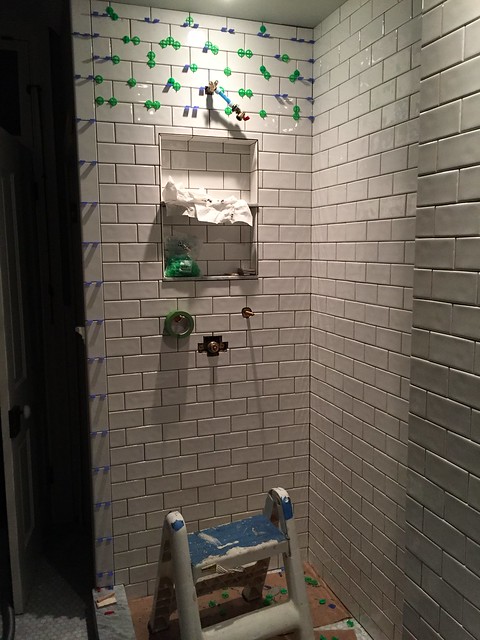
<p>It all started late Friday night when I decided to finish up our last little bit of tiling in the shower. We had just five rows of tile left and a whole bunch of bullnose to install, and I received some verbal inspiration from Wendy (read, yelling) and a second wind for the day at about 10:00 pm.</p>
<p>
</p>
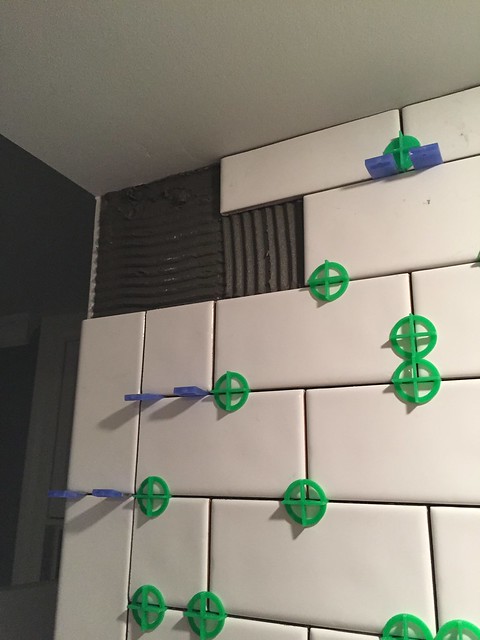
<div class="MediaContainer PhotoContainer"><a href="https://farm3.staticflickr.com/2944/15145080129_79d01118a1_z.jpg" rel="PhotoPopup" popupheight="640" popupwidth="480"><img alt="" src="https://farm3.staticflickr.com/2944/15145080129_79d01118a1.jpg" width="375" height="500" style="border-width: 0px; border-style: solid;" /></a></div>
<p>After after a brief few hours of late night effort we had a finished master bathroom tile project and I was feeling good. </p>
<p>
</p>
<div class="MediaContainer PhotoContainer"><a href="https://farm4.staticflickr.com/3909/15145312677_b21094e55f_z.jpg" rel="PhotoPopup" popupheight="640" popupwidth="480"><img alt="" src="https://farm4.staticflickr.com/3909/15145312677_b21094e55f.jpg" width="375" height="500" style="border-width: 0px; border-style: solid;" /></a></div>
<p>By this time Wendy was sound asleep, but my night owl ways coupled with a bunch of crazy Friday night tiling had me wired. I decided to clean up my supplies and then cap off the debauchery with a few episodes of Game of Thrones that I'm behind on, a little laundry, and some work (for the old day job) I had to get done. </p>
<p>At about 3:45 am I had far exceeded my expected bedtime and had finally wrapped my work, so I went down to the basement to check on the load of laundry still in the dryer. It wasn't quite dry yet, so I cursed the horrendous machine, restarted the dryer one more time, and headed upstairs to bed. But this last check of the basement is an important part of the story, so make note of the time, about 4:00 am. </p>
<p>As my head hit the pillow just after 4:00 am I was out like a light. I figured I'd sleep until about 9:00 or 10:00 to get a half way decent night's sleep, but those plans were derailed at about 8:15 am when Wendy gently (by yelling from the bathroom) woke me to ask, "Did you shut off the water last night?," a not too uncommon occurrence in our house as of late due to the work in the master bathroom.</p>
<p>My foggy brain began processing the typically simple but in the haze of four hours sleep, overwhelmingly complex question. Through my sleep depravation I thought to myself, "Water? Had I? I don't remember doing that? Why would the water be off? Sleep? I need more sleep. But the water...why is it off?...Oh shit!" </p>
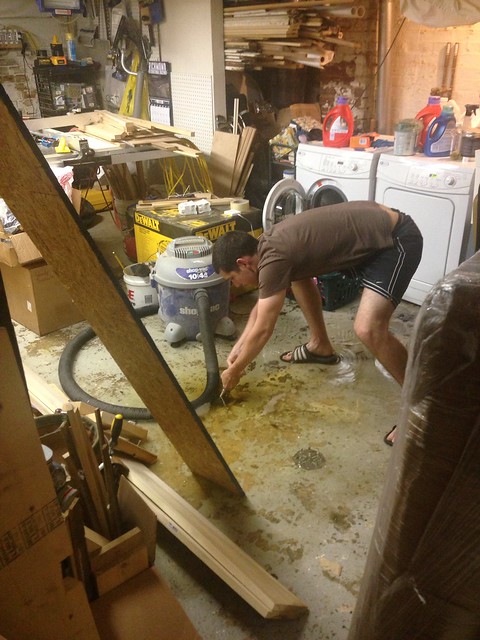
<p>At that moment I realized what had possibly happened. I leapt from bed, ran down the stairs, and into the basement. On my way down the stairs my ears, likely in a heightened state since my eyes were still partially functional at best, began to pick up the telltale high pitched and sustained beep of the basement leak sensor. Sure enough, when I arrived on the scene of the crime there sat about three to four inches of standing water in the middle of our cruddy basement floor. </p>
<p>
</p>
<div class="MediaContainer PhotoContainer"><a href="https://farm6.staticflickr.com/5445/9243358191_1c449387c6_z.jpg" rel="PhotoPopup" popupheight="640" popupwidth="480"><img alt="" src="https://farm6.staticflickr.com/5445/9243358191_1c449387c6.jpg" width="375" height="500" style="border-width: 0px; border-style: solid;" /></a><br />
<em>Not an actual photo of this event, but pretty much the same end result.</em></div>
<p>"Yes, this is why the water is off," I thought. "The <a href="http://www.oldtownhome.com/2013/2/13/Somebody-Call-9-1-1-WaterCop-is-Working-in-the-Basement/">WaterCop leak detector</a> and automatic shutoff had been tripped, and miracle of all miracles, this little piece of insurance <a href="http://www.oldtownhome.com/2013/3/18/Installing-a-WaterCop-Leak-Detection-System/">we installed a little over a year ago</a> had possibly just paid off many times over!"</p>
<p>Given this whole production was occurring during a period when I'd have rather been sleeping, and the fact I was in my underwear, my phone was upstairs, and there was a crapload of water in the basement, we didn't get any good photos of the disaster, but trust me when I say it was marginally bad. I have to say that I'm quite sorry you missed out on this nugget due to my own lack of priority.</p>
<p>The water had pooled in the center of the floor near the basement drain, and it extended out towards the walls a good five feet in either direction. But the leak sensor was properly positioned closer to the middle of the floor, so the sensor tripped and the nearby shutoff valve on the main water line had completely shut, keeping the bad situation from becoming something truly catastrophic. </p>
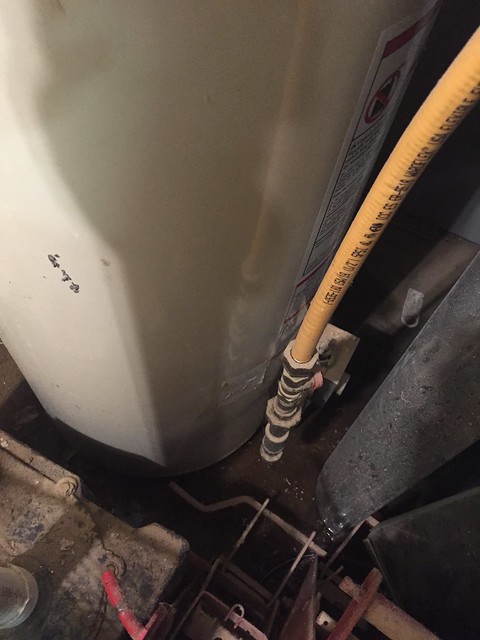
<p>Not quite sure where the water was coming from, we pulled the plug to the drain in the middle of the floor and allowed the water to drain from the basement. At this point, our attention turned from the pool of water to the possible culprit. Though I wasn't sure, I suspected the hot water tank might have been behind this early morning disruption. My suspicions were validated when we turned the water back on and the malfunctioning water heater began pouring water out on the basement floor as quickly as it could fill. </p>
<p>
</p>
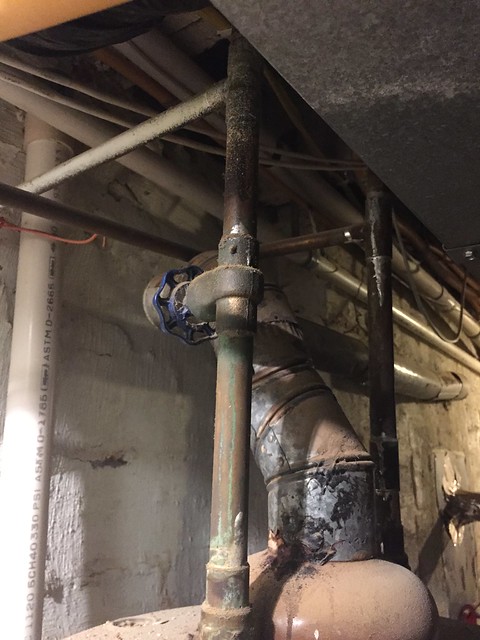
<div class="MediaContainer PhotoContainer"><a href="https://farm4.staticflickr.com/3899/15145129750_71c860aee2_z.jpg" rel="PhotoPopup" popupheight="640" popupwidth="480"><img alt="" src="https://farm4.staticflickr.com/3899/15145129750_71c860aee2.jpg" width="375" height="500" style="border-width: 0px; border-style: solid;" /></a></div>
<p>As water gushed from the large fractured tank, we knew exactly why we had about 50 gallons of water sitting in the basement this fateful morning. But we also knew even better that the WaterCop had seriously saved our hides. While our basement flood was significant at about 50 gallons, had we not had our leak detector installed we'd have likely found several feet of water representing thousands of gallons of uncontrolled water flow. </p>
<p>Our tools, stored items, computers, laundry appliances, and even clawfoot tub, would have been completely submerged. It would have been a pure disaster. Here's some actual footage of the interior of our failure of a water heater.</p>
<p>
</p>
<div class="MediaContainer VideoEmbed"><iframe width="560" height="349" src="https://www.youtube.com/embed/VY1FknUVRfA?wmode=transparent&amp;hd=1" frameborder="0" allowfullscreen="true"></iframe></div>
<p>So now we find ourselves faced with a home without hot water and a major decision to make. We knew our water heater would likely not last much longer, having been warned of its limited life expectancy during our home inspection more than 11 years ago, but we never expected it to let go so violently without even a trickle warning of a leak. </p>
<p>Since "the Great Gushing," we've been investigating, researching, and preparing for a replacement. But the big question is just what do we replace it with? Do we just swap in a new tank? What about a bigger tank, or a more efficient unit, perhaps with a direct vent? What about tankless? What about indirect paired with a boiler? </p>
<p>Luckily we were able to shut off the cold water valve to the water heater, so we at least have cold water running in the house. Life is a lot easier with cold water than it is with no water, as I'm sure you can guess. (We also shut off the gas and pilot light on the tank for good measure.)</p>
<p>
</p>
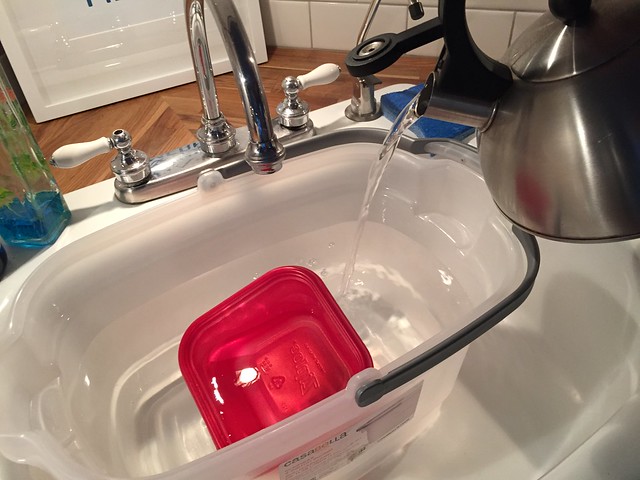
<div class="MediaContainer PhotoContainer"><a href="https://farm3.staticflickr.com/2942/15331849455_13dc881fd6_z.jpg" rel="PhotoPopup" popupheight="640" popupwidth="480"><img alt="" src="https://farm3.staticflickr.com/2942/15331849455_13dc881fd6.jpg" width="375" height="500" style="border-width: 0px; border-style: solid;" /></a></div>
<p>We have a whole lot of research to do, but we'd love to hear your opinions on the matter if you have any. As you know, we like to be slow and deliberate about our plans and make a carefully calculated decision. So this quick decision stuff is for the birds in our book. Nonetheless, we need to make a choice, otherwise our approach to showering with a bucket and tea kettle will become less temporary then either of us would prefer.</p>
<p>
</p>
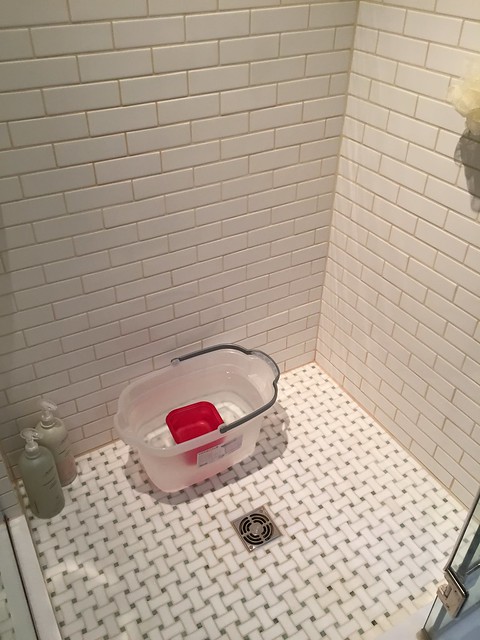
<div class="MediaContainer PhotoContainer"><a href="https://farm3.staticflickr.com/2944/15145135360_a70707b460_z.jpg" rel="PhotoPopup" popupheight="480" popupwidth="640"><img alt="" src="https://farm3.staticflickr.com/2944/15145135360_a70707b460.jpg" width="500" height="375" style="border-width: 0px; border-style: solid;" /></a></div>
<p>At this point we wake up, fill a large bucket, heat a pot of water, mix it all together, and then proceed to take what resembles the ALS challenge in the privacy of our bathroom. While we still have cold water, our pressure balanced shower valve won't function without equal pressure from both sides. It prevents the situation where you burn your partner with a toilet flush, but it makes it impossible to shower without a functional hot water heater.</p>
<p>
</p>
<div class="MediaContainer PhotoContainer"><a href="https://farm4.staticflickr.com/3885/15331852745_d7677feb05_z.jpg" rel="PhotoPopup" popupheight="640" popupwidth="480"><img alt="" src="https://farm4.staticflickr.com/3885/15331852745_d7677feb05.jpg" width="375" height="500" style="border-width: 0px; border-style: solid;" /></a></div>
<p>So while Wendy dreams of having an indoor swimming pool one day, this isn't exactly what she had in mind. If you have any recommendations on hot water heaters or personal experiences good or bad, we're all ears.</p><p><a href="https://www.oldtownhome.com/2014/9/23/Who-Says-Basement-Swimming-Pools-are-Only-for-the-Wealthy/">Read Full Post</a></p>]]></content>
    <category term="Basement" />
    <category term="Header Image" />
    <category term="Leaks" />
    <PostImage>https://farm3.staticflickr.com/2943/15145595197_6fc0076f69.jpg</PostImage>
    <media:thumbnail url="https://farm3.staticflickr.com/2943/15145595197_6fc0076f69_t.jpg" />
    <ExtensionElements>
      <Item>PostImage</Item>
      <Item>media:thumbnail</Item>
    </ExtensionElements>
  </entry>
  <entry>
    <guid>2d1b3ccc-f642-4374-aa15-4e80780a6b7a</guid>
    <id>https://www.oldtownhome.com/2013/10/16/Deferred-Maintenance-and-Bubbling-Plaster-Its-Caulk-to-the-Rescue/</id>
    <title>Deferred Maintenance and Bubbling Plaster. It's Caulk to the Rescue!</title>
    <summary type="html"><![CDATA[<p>Deferred maintenance is the pits. This is especially true when that deferred maintenance is needed on something you already hate and want to replace, but you've not gotten to that point in your project list. And deferred maintenance is the absolute worst when the fact you've deferred it, even on something you'll ultimately replace, ends up affecting another project you've already completed. Such is the case with a little piece of deferred maintenance I undertook in the middle of last week. </p><p>It wasn't too many years ago that we did a quick spruce up on our family room. Though it wasn't an "end all, be all" type of project, we wanted to make the room look nice and loved until we are able to really tear into it years from now. </p><div class="MediaContainer PhotoContainer"><a href="http://farm9.staticflickr.com/8207/8228092409_97caa11801_z.jpg" rel="PhotoPopup" popupwidth="640" popupheight="427"><img alt="" width="500" height="333" style="border-width: 0px; border-style: solid;" src="https://farm9.staticflickr.com/8207/8228092409_97caa11801.jpg"></a></div><p>As part of this project, we fixed up some bubbling plaster here and there, as there was no evidence of active leaking. Thinking all was good and well, we lived our lives and enjoyed the room. </p><p>Then, just a short months ago, I was looking around the room and noticed an issue. It seemed there were some new cracks and a bit of softened and bubbling plaster that had appeared beneath the windows. </p><div class="MediaContainer PhotoContainer"><a href="http://farm6.staticflickr.com/5514/10312826406_d8c5ff723b_z.jpg" rel="PhotoPopup" popupwidth="480" popupheight="640"><img alt="" width="375" height="500" style="border-width: 0px; border-style: solid;" src="https://farm6.staticflickr.com/5514/10312826406_d8c5ff723b.jpg"></a></div><p>UGH!!!</p><p>I thought we didn't need to deal with this sort of thing. I was obviously wrong. I took a little trip outside and noticed the primary issue. The window sills in the 1950's replacement windows&mdash;the windows that are neither the correct size, style, or quality for our home&mdash;had apparently begun rotting away. To make matters worse, the paint and caulk where the sills meet the house had cracked, and were now allowing water infiltration every time it rained. </p> <a href="https://www.oldtownhome.com/2013/10/16/Deferred-Maintenance-and-Bubbling-Plaster-Its-Caulk-to-the-Rescue/">more</a>]]></summary>
    <published>2013-10-16T13:59:00.000-04:00</published>
    <updated>2013-10-16T13:59:00.000-04:00</updated>
    <link rel="alternate" href="https://www.oldtownhome.com/2013/10/16/Deferred-Maintenance-and-Bubbling-Plaster-Its-Caulk-to-the-Rescue/" />
    <author>
      <name>Alex</name>
    </author>
    <content type="html"><![CDATA[<p>Deferred maintenance is the pits. This is especially true when that deferred maintenance is needed on something you already hate and want to replace, but you've not gotten to that point in your project list. And deferred maintenance is the absolute worst when the fact you've deferred it, even on something you'll ultimately replace, ends up affecting another project you've already completed. Such is the case with a little piece of deferred maintenance I undertook in the middle of last week. </p>
<p>It wasn't too many years ago that we did a quick spruce up on our family room. Though it wasn't an "end all, be all" type of project, we wanted to make the room look nice and loved until we are able to really tear into it years from now. </p>
<div class="MediaContainer PhotoContainer"><a href="http://farm9.staticflickr.com/8207/8228092409_97caa11801_z.jpg" rel="PhotoPopup" popupwidth="640" popupheight="427"><img alt="" width="500" height="333" style="border-width: 0px; border-style: solid;" src="https://farm9.staticflickr.com/8207/8228092409_97caa11801.jpg"></a></div>
<p>As part of this project, we fixed up some bubbling plaster here and there, as there was no evidence of active leaking. Thinking all was good and well, we lived our lives and enjoyed the room. </p>
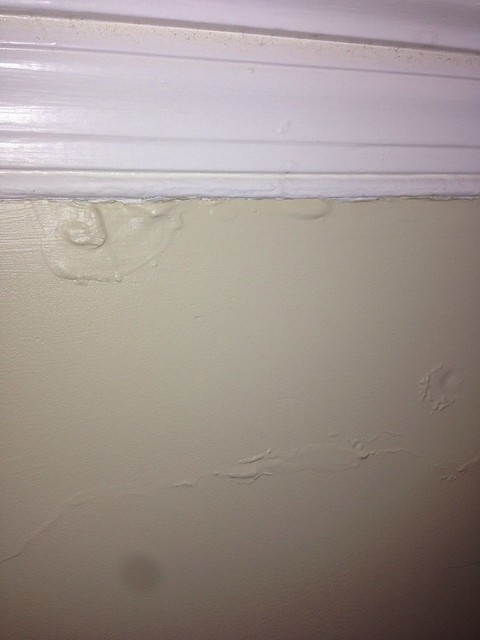
<p>Then, just a short months ago, I was looking around the room and noticed an issue. It seemed there were some new cracks and a bit of softened and bubbling plaster that had appeared beneath the windows. </p>
<div class="MediaContainer PhotoContainer"><a href="http://farm6.staticflickr.com/5514/10312826406_d8c5ff723b_z.jpg" rel="PhotoPopup" popupwidth="480" popupheight="640"><img alt="" width="375" height="500" style="border-width: 0px; border-style: solid;" src="https://farm6.staticflickr.com/5514/10312826406_d8c5ff723b.jpg"></a></div>
<p>UGH!!!</p>
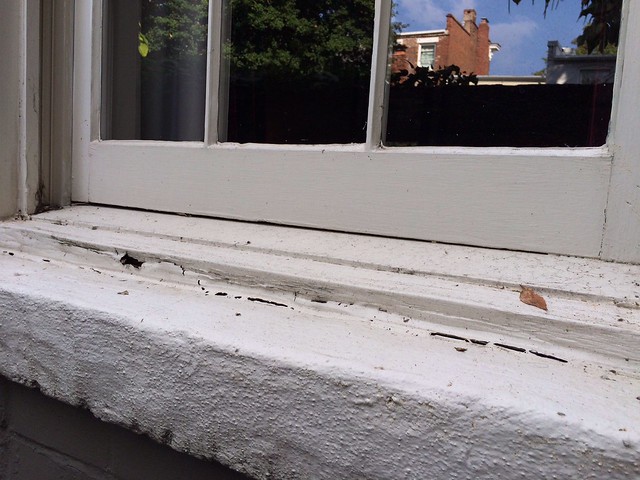
<p>I thought we didn't need to deal with this sort of thing. I was obviously wrong. I took a little trip outside and noticed the primary issue. The window sills in the 1950's replacement windows&mdash;the windows that are neither the correct size, style, or quality for our home&mdash;had apparently begun rotting away. To make matters worse, the paint and caulk where the sills meet the house had cracked, and were now allowing water infiltration every time it rained. </p>
<div class="MediaContainer PhotoContainer"><a href="http://farm4.staticflickr.com/3762/10310726563_b6d0cce13f_z.jpg" rel="PhotoPopup" popupwidth="640" popupheight="480"><img alt="" width="500" height="375" style="border-width: 0px; border-style: solid;" src="https://farm4.staticflickr.com/3762/10310726563_b6d0cce13f.jpg"></a></div>
<p>No wonder we had cracked and bubbling plaster and paint. There were "giant" (in terms of water infiltration, every hole is a GIANT HOLE!!!!) holes letting water trespass all over the inside of our home's walls. </p>
<p>Though I wanted to stomp around and throw things, ultimately ripping both windows out and building new ones, my still-in-progress storm window build reminded me this was probably not the most prudent approach to the situation. Instead, I had to figure out how to fix the problem. My best approach? Well, I deferred the maintenance. </p>
<p>The beauty of deferred maintenance is that it allows you to noodle though your dilemma until you come up with a possible solution. Wendy often refers to this process as "torturing yourself and obsessing," whereas I like to think of it more as "pondering masochistically." To each their own.</p>
<p>In this case my deference to the the much needed maintenance extended along until it became a more pressing situation. I knew a very rainy weekend was forecasted,&nbsp;so I felt the need to take care of this leak issue sooner than later.</p>
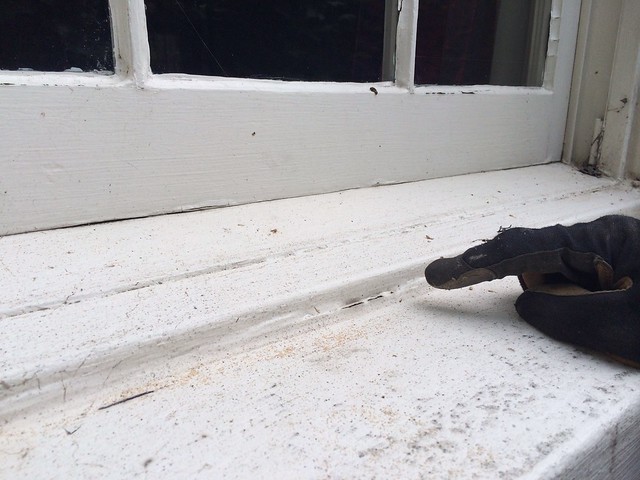
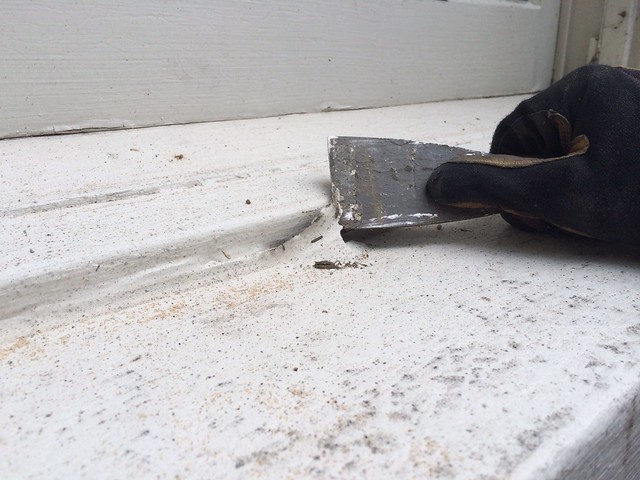
<p>I started by taking my putty knife to the cracked area just to see what we were working with. Shockingly enough, what started as a simple poke with a stiff putty knife quickly turned into peeling back layer after layer of chunks of paint that had all been compromised by the constant infiltration of water.</p>
<div class="MediaContainer PhotoContainer"><a href="http://farm3.staticflickr.com/2878/10310537164_1ae9fea258_z.jpg" rel="PhotoPopup" popupwidth="640" popupheight="480"><img alt="" width="500" height="375" style="border-width: 0px; border-style: solid;" src="https://farm3.staticflickr.com/2878/10310537164_1ae9fea258.jpg"></a></div>
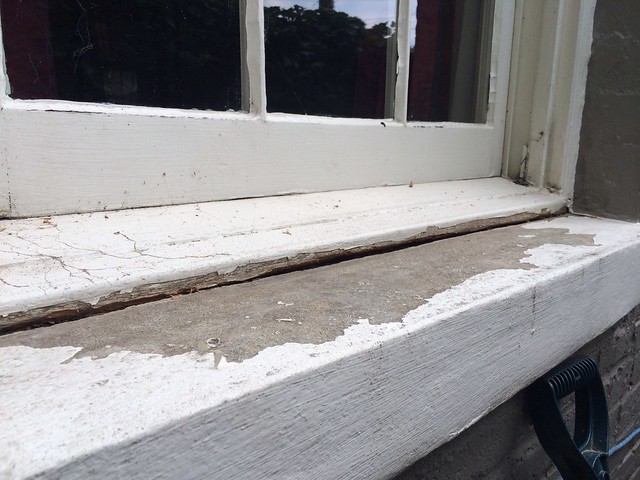
<p>The still was partially rotted, and the bubbled paint extended well down the concrete sill. </p>
<div class="MediaContainer PhotoContainer"><a href="http://farm8.staticflickr.com/7349/10310606776_f68ec1309b_z.jpg" rel="PhotoPopup" popupwidth="640" popupheight="480"><img alt="" width="500" height="375" style="border-width: 0px; border-style: solid;" src="https://farm8.staticflickr.com/7349/10310606776_f68ec1309b.jpg"></a></div>
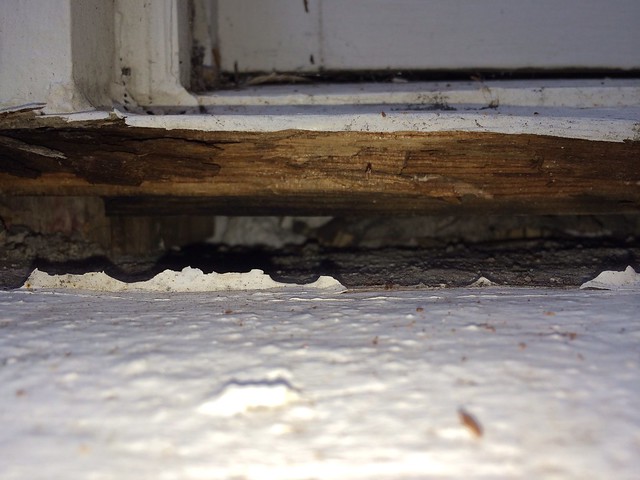
<p>The second window was actually far worse shape than the first. If I were on This Old House and I were either Norm or Tom, I would've said, "That sill, it's in really tough shape...might even be toast. Is it even worth saving?"</p>
<div class="MediaContainer PhotoContainer"><a href="http://farm8.staticflickr.com/7334/10127928326_e4eb956631_z.jpg" rel="PhotoPopup" popupwidth="640" popupheight="480"><img alt="" width="500" height="375" style="border-width: 0px; border-style: solid;" src="https://farm8.staticflickr.com/7334/10127928326_e4eb956631.jpg"></a></div>
<p>It seemed the window sill had taken the brunt of the water, rotted wood flaking away as I dug at the problem area. It was not a pretty sight. Not only did the water cause so much damage that the wood just fell away, we could clearly see the person who had installed these windows many years earlier had used paper towels as either insulation or shims. What's up with people using paper towels in crappy window installs? I know other bloggers feel my pain here!</p>
<div class="MediaContainer PhotoContainer"><a href="http://farm4.staticflickr.com/3779/10310556604_8cbb01d200_z.jpg" rel="PhotoPopup" popupwidth="640" popupheight="480"><img alt="" width="500" height="375" style="border-width: 0px; border-style: solid;" src="https://farm4.staticflickr.com/3779/10310556604_8cbb01d200.jpg"></a></div>
<p>Once I had all of the rot and flaking paint removed I could begin working on a solution. Besides, as long as I was making this face, I had to be doing something right...right?</p>
<div class="MediaContainer PhotoContainer"><a href="http://farm3.staticflickr.com/2805/10128046873_af82db933e_z.jpg" rel="PhotoPopup" popupwidth="480" popupheight="640"><img alt="" width="375" height="500" style="border-width: 0px; border-style: solid;" src="https://farm3.staticflickr.com/2805/10128046873_af82db933e.jpg"></a></div>
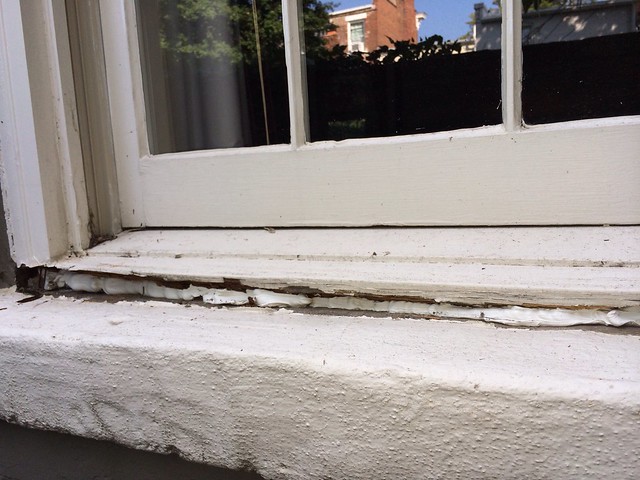
<p>The first window was pretty easy. Using my favorite "<a href="http://oldtownhome.com/2011/6/14/Toolbox-Tuesday-Do-Your-Best-Then-Caulk-the-Rest/">Big Stretch</a>" caulk, I filled the gap I had just created and verified there were no routes where the water could sneak in. </p>
<div class="MediaContainer PhotoContainer"><a href="http://farm8.staticflickr.com/7382/10127998573_0d0ffd82ff_z.jpg" rel="PhotoPopup" popupwidth="640" popupheight="480"><img alt="" width="500" height="375" style="border-width: 0px; border-style: solid;" src="https://farm8.staticflickr.com/7382/10127998573_0d0ffd82ff.jpg"></a></div>
<p>Running my finger along the newly laid bead of caulk to ensure a nice presentation and a packed seam, I felt good about taking a baby step in the right direction. </p>
<p>However, the bigger issue was the second window and the huge area of rot. Ideally I would have cut away the rot and then added a new piece of wood with copious amounts of waterproof glue. However, this is not our forever window, and I wanted the solution to be "good enough" and fast, we'll worry about the best solution when we actually replace the windows a little ways down the road. Besides, anything should beat what's there now. The horror. </p>
<p>So what do you do when you want "good enough?" You do your best, then you caulk the rest!</p>
<p>I loaded in some caulk as a base, then shoved in a whole bunch of foam backer rod for caulk support. </p>
<div class="MediaContainer PhotoContainer"><a href="http://farm6.staticflickr.com/5522/10310624626_62e3277a43_z.jpg" rel="PhotoPopup" popupwidth="640" popupheight="480"><img alt="" width="500" height="375" style="border-width: 0px; border-style: solid;" src="https://farm6.staticflickr.com/5522/10310624626_62e3277a43.jpg"></a></div>
<p>That's a lotta caulk!</p>
<p>Then I proceeded to load in even more caulk. I think I used up almost the whole tube. It wasn't pretty, I assure you. </p>
<p>In order to ensure the finished project didn't look like a giant mound of melted marshmallow flowing from beneath our window, I used my putty knife to give me a somewhat decent edge on the large amount of caulk. </p>
<p>
</p>
<div class="MediaContainer PhotoContainer"><a href="http://farm6.staticflickr.com/5441/10127972503_85c7e66cd2_z.jpg" rel="PhotoPopup" popupwidth="640" popupheight="480"><img alt="" width="500" height="375" style="border-width: 0px; border-style: solid;" src="https://farm6.staticflickr.com/5441/10127972503_85c7e66cd2.jpg"></a></div>
<p>Big Stretch caulk, besides being able to stretch several inches rather than crack, is pretty great at standing up during its cure, rather than sagging. This makes Big Stretch almost perfect for this Frankenfix of a window leak solution. </p>
<p>After allowing 24 hours dry time we checked the caulk and determined we were good to proceed with the next step. Rain was headed our way just a day later, so the sooner we could get some paint on the sills the better. </p>
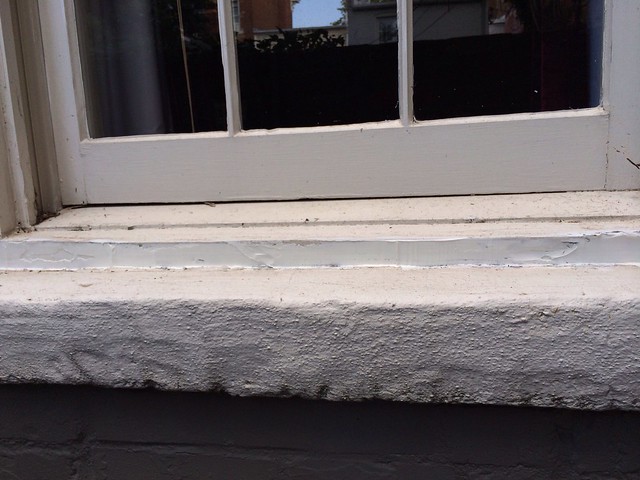
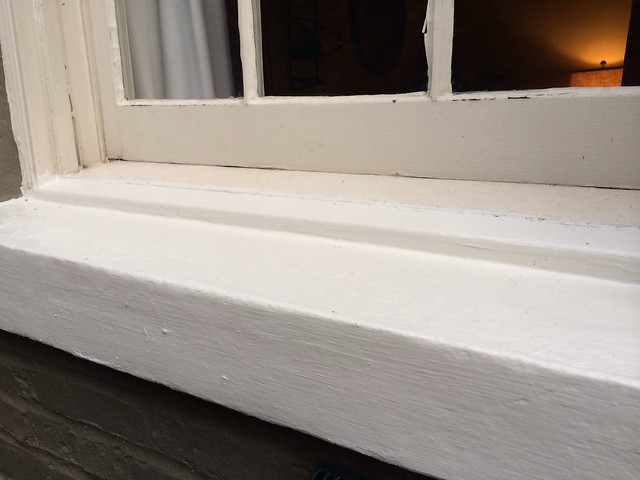
<p>Since I had exposed so much wood, had the newly curing caulk, and bare concrete, we started by priming the clean sills, and after allowing adequate dry time for the primer and under the cover of darkness, Wendy held the light for me while I applied the new and very thick coat of our exterior trim color, "Pearly White." No good photos can come from painting under the cover of darkness, so here it is the next day, in all of it's freshly painted glory.</p>
<div class="MediaContainer PhotoContainer"><a href="http://farm4.staticflickr.com/3717/10310605965_4d8d85740d_z.jpg" rel="PhotoPopup" popupwidth="640" popupheight="480"><img alt="" width="500" height="375" style="border-width: 0px; border-style: solid;" src="https://farm4.staticflickr.com/3717/10310605965_4d8d85740d.jpg"></a></div>
<p>It's amazing how different the old Pearly White looks next to the newly applied cost. It's the same color, even from the same bucket of paint, but the old stuff had taken on far more of a cream look over the years. It's amazing how paint can change so significantly when exposed to the elements. In about four or five weeks the two paint colors will actually be very close to each other.&nbsp;</p>
<p>Though this wasn't a major undertaking, it was an element of deferred maintenance I was glad to check off of the master list. It helped to take our home's exterior one step further towards getting ready for the fall and winter, and will hopefully keep water from sneaking under the window and into our living room walls. </p>
<p>Now we just need to start looking at the rest of our lengthy outdoor list. You know, little deferred maintenance items like our downspout, painting our roof, and the looming completion of the first phase storm window project. Any. Day. Now. </p><p><a href="https://www.oldtownhome.com/2013/10/16/Deferred-Maintenance-and-Bubbling-Plaster-Its-Caulk-to-the-Rescue/">Read Full Post</a></p>]]></content>
    <category term="Header Image" />
    <category term="Leaks" />
    <category term="Projects:Home Improvement" />
    <category term="Windows" />
    <PostImage>http://farm4.staticflickr.com/3689/10313049513_bfd0bcf328.jpg</PostImage>
    <media:thumbnail url="https://farm4.staticflickr.com/3689/10313049513_bfd0bcf328_t.jpg" />
    <ExtensionElements>
      <Item>PostImage</Item>
      <Item>media:thumbnail</Item>
    </ExtensionElements>
  </entry>
  <entry>
    <guid>a1e52478-142d-404a-a96f-130435329ce9</guid>
    <id>https://www.oldtownhome.com/2013/7/16/Toolbox-Tuesday-TimeOut-to-Prevent-a-Washing-Machine-Disaster/</id>
    <title>Toolbox Tuesday: TimeOut to Prevent a Washing Machine Disaster</title>
    <summary type="html"><![CDATA[<p>If there's one thing to know about me as a homeowner, it's that I'm paranoid of water. My fear of water, or at least of water running rampant in our home, stems from what's been drilled into my head over the years. Water is the enemy of structure, and when left unchecked, leaks or floods can destroy your home or your home's contents, potentially throwing your entire life into complete and utter chaos. Sensationalist enough for you? Perhaps, but just ask someone who's lived through it!</p><p>Just last week I told you all about how I <a href="http://www.oldtownhome.com/2013/7/10/Raining-in-the-Guest-Bedroom/index.aspx">fixed a leak on our roof.</a> Months ago I told you all about the <a href="http://www.oldtownhome.com/2013/2/13/Somebody-Call-9-1-1-WaterCop-is-Working-in-the-Basement/">installation of a leak detection and water shut off system</a> called the Water Cop. And during our time since we purchased our very old house we've dealt with various broken and clogged pipes, pinhole leaks in plumbing, water pouring from ceiling light fixtures, and even the occasional makeshift swimming pool in the basement, all of which we've taken care of on our own.</p><p>
</p><div class="MediaContainer PhotoContainer"><a href="http://farm6.staticflickr.com/5445/9243358191_1c449387c6_z.jpg" rel="PhotoPopup" popupheight="640" popupwidth="480"><img alt="" src="https://farm6.staticflickr.com/5445/9243358191_1c449387c6.jpg" width="375" height="500" style="border-width: 0px; border-style: solid;"></a><br>
<em>Flooded basement thanks to a neighbor's broken pipe. :-(</em></div><p>My goal, beyond simply fixing the leaks that arise in our home, is to either minimize the damage from potential leaks or to prevent their appearance altogether. Sometimes this feels like a losing battle, but I do feel like I'm making progress.</p><p>One of the single most common culprits for disastrous home flooding actually originates in an area of your home you use to clean your clothes, right behind your washing machine. Whether we're talking about a burst supply hose or a malfunction somewhere within the washing machine itself, a leak at the washing machine can run unchecked for hours or days, allowing thousands of gallons of water to flood and ruin your home and making it look like you were just hit by the Wet Bandits. </p><p>More sensationalism, eh? Does this paint a horrible enough picture for you? I've actually seen this occur first hand when my parent's second floor washing machine malfunctioned and their overflow drain clogged, allowing water to run into their walls and ceiling below. Tens of thousands of dollars of damage were done to their home, and the resulting&nbsp;inconvenience&nbsp;and effort necessary to clean up, repair, and ensure mold does not grow inside their walls was massive. Talk about a horrible but completely preventable scenario.</p> <a href="https://www.oldtownhome.com/2013/7/16/Toolbox-Tuesday-TimeOut-to-Prevent-a-Washing-Machine-Disaster/">more</a>]]></summary>
    <published>2013-07-16T09:40:00.000-04:00</published>
    <updated>2013-07-16T09:40:00.000-04:00</updated>
    <link rel="alternate" href="https://www.oldtownhome.com/2013/7/16/Toolbox-Tuesday-TimeOut-to-Prevent-a-Washing-Machine-Disaster/" />
    <author>
      <name>Alex</name>
    </author>
    <content type="html"><![CDATA[<p>If there's one thing to know about me as a homeowner, it's that I'm paranoid of water. My fear of water, or at least of water running rampant in our home, stems from what's been drilled into my head over the years. Water is the enemy of structure, and when left unchecked, leaks or floods can destroy your home or your home's contents, potentially throwing your entire life into complete and utter chaos. Sensationalist enough for you? Perhaps, but just ask someone who's lived through it!</p>
<p>Just last week I told you all about how I <a href="http://www.oldtownhome.com/2013/7/10/Raining-in-the-Guest-Bedroom/index.aspx">fixed a leak on our roof.</a> Months ago I told you all about the <a href="http://www.oldtownhome.com/2013/2/13/Somebody-Call-9-1-1-WaterCop-is-Working-in-the-Basement/">installation of a leak detection and water shut off system</a> called the Water Cop. And during our time since we purchased our very old house we've dealt with various broken and clogged pipes, pinhole leaks in plumbing, water pouring from ceiling light fixtures, and even the occasional makeshift swimming pool in the basement, all of which we've taken care of on our own.</p>
<p>
</p>
<div class="MediaContainer PhotoContainer"><a href="http://farm6.staticflickr.com/5445/9243358191_1c449387c6_z.jpg" rel="PhotoPopup" popupheight="640" popupwidth="480"><img alt="" src="https://farm6.staticflickr.com/5445/9243358191_1c449387c6.jpg" width="375" height="500" style="border-width: 0px; border-style: solid;"></a><br>
<em>Flooded basement thanks to a neighbor's broken pipe. :-(</em></div>
<p>My goal, beyond simply fixing the leaks that arise in our home, is to either minimize the damage from potential leaks or to prevent their appearance altogether. Sometimes this feels like a losing battle, but I do feel like I'm making progress.</p>
<p>One of the single most common culprits for disastrous home flooding actually originates in an area of your home you use to clean your clothes, right behind your washing machine. Whether we're talking about a burst supply hose or a malfunction somewhere within the washing machine itself, a leak at the washing machine can run unchecked for hours or days, allowing thousands of gallons of water to flood and ruin your home and making it look like you were just hit by the Wet Bandits. </p>
<p>More sensationalism, eh? Does this paint a horrible enough picture for you? I've actually seen this occur first hand when my parent's second floor washing machine malfunctioned and their overflow drain clogged, allowing water to run into their walls and ceiling below. Tens of thousands of dollars of damage were done to their home, and the resulting&nbsp;inconvenience&nbsp;and effort necessary to clean up, repair, and ensure mold does not grow inside their walls was massive. Talk about a horrible but completely preventable scenario.</p>
<p>My paranoia has led me to be rather diligent when it comes to plumbing. I use only metal braided supply lines for the washing machine (and other fixtures) to help prevent the possibility of a hose from rupturing while under constant pressure. And I also make sure I replace those metal braided hoses every five years. </p>
<p><em>Did you know that braided metal hoses can still burst and are only good for five years? I know some bloggers who've had this very scenario occur. Got something you need to think about replacing? But before you run off to buy a new set of hoses, keep reading today's post.</em></p>
<div class="ToolItem">
<iframe src="http://rcm-na.amazon-adsystem.com/e/cm?t=oltoho-20&amp;o=1&amp;p=8&amp;l=as1&amp;asins=B009XSKRZI&amp;IS1=1&amp;ref=qf_sp_asin_til&amp;fc1=3A3128&amp;lt1=_blank&amp;m=amazon&amp;lc1=61838A&amp;bc1=FAFAF8&amp;bg1=FAFAF8&amp;f=ifr" style="width: 120px; height: 240px;" scrolling="no" marginwidth="0" marginheight="0" frameborder="0"></iframe>
</div>
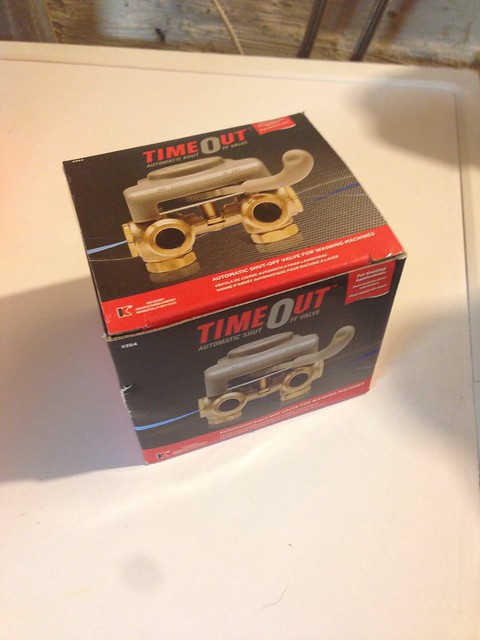
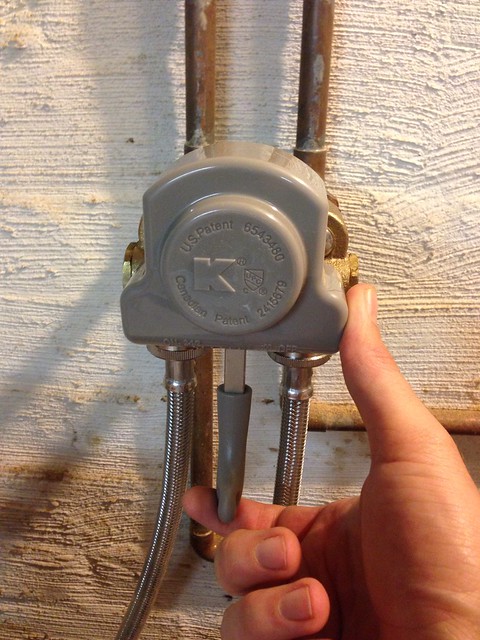
<p>I was recently ordering some new braided plumbing supply lines for our washing machine using Amazon and saw something in the recommended products section that caught my eye. It's called the "TimeOut" and aims to help prevent the potentially disastrous effects that can arise from an uncontrolled washing machine related leak.</p>
<p>The idea of the TimeOut is simple. It allows you to open the valve to your washing machine for a timed duration (up to 2-1/2 hours), and then shuts itself off after the time has expired. The only thing you need to do differently is to take an extra second to push the timer lever to the left before you start a load of laundry. As the person in our household responsible for all of our clothes washing, I can tell you for certain that this is not a difficult additional step.</p>
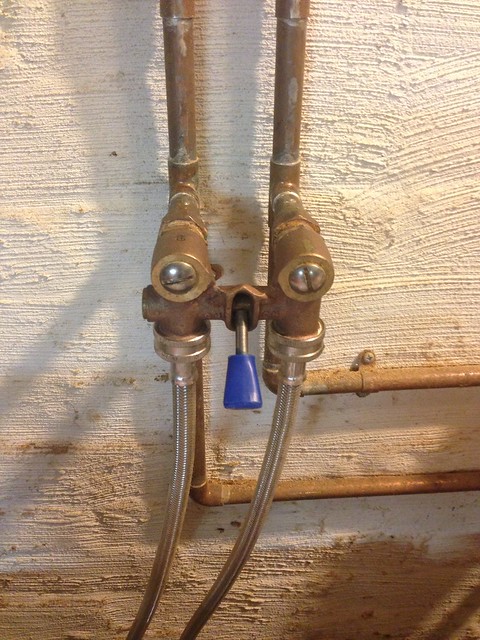
<p>The cool thing about this little product is that it's a retrofit item. Now I'm not saying it will automajically replace your washing machine's shut off valves, but if you have one of the standard Watts or similar brand shut off valves installed behind your washing machine, you might be able to install this great little item with just a few tools, in just a few steps, and using just a few minutes.</p>
<p>
</p>
<div class="MediaContainer PhotoContainer"><a href="http://farm3.staticflickr.com/2837/9290609765_cbcc156abc_z.jpg" rel="PhotoPopup" popupheight="640" popupwidth="480"><img alt="" src="https://farm3.staticflickr.com/2837/9290609765_cbcc156abc.jpg" width="375" height="500" style="border-width: 0px; border-style: solid;"></a></div>
<p>Back when we purchased our home in 2003, one of my very first projects involved moving some plumbing in our basement, installing water hammer suppressors, new quarter turn shut off valves, and a Watts washing machine shut off valve. In doing this project over 10 years ago I just so happened to be installing the very shut off valve necessary to make the install of the "TimeOut" a piece of plumbing cake...that sounds gross.</p>
<p>
</p>
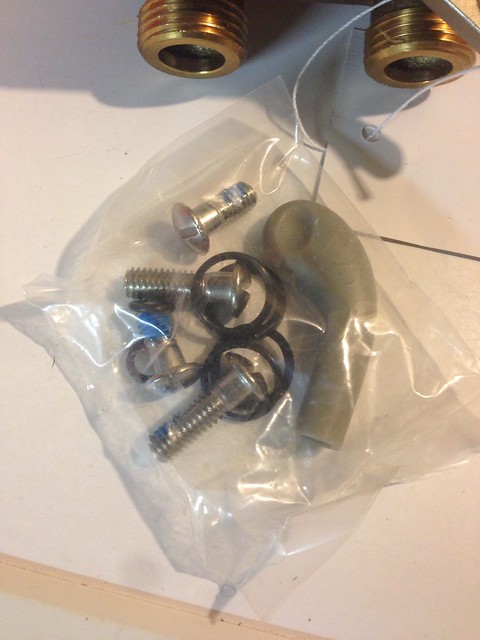
<div class="MediaContainer PhotoContainer"><a href="http://farm8.staticflickr.com/7316/9290607383_5671e82a0c_z.jpg" rel="PhotoPopup" popupheight="640" popupwidth="480"><img alt="" src="https://farm8.staticflickr.com/7316/9290607383_5671e82a0c.jpg" width="375" height="500" style="border-width: 0px; border-style: solid;"></a></div>
<p>The actually install of this device required only a flat head screwdriver and a wrench. The contents of the box contains everything else needed for this project. The primary timer unit and valve itself and a small baggy of screws and rubber washers needed for assembly.  </p>
<p>
</p>
<div class="MediaContainer PhotoContainer"><a href="http://farm8.staticflickr.com/7339/9293378348_4f0ec7644d_z.jpg" rel="PhotoPopup" popupheight="640" popupwidth="480"><img alt="" src="https://farm8.staticflickr.com/7339/9293378348_4f0ec7644d.jpg" width="375" height="500" style="border-width: 0px; border-style: solid;"></a></div>
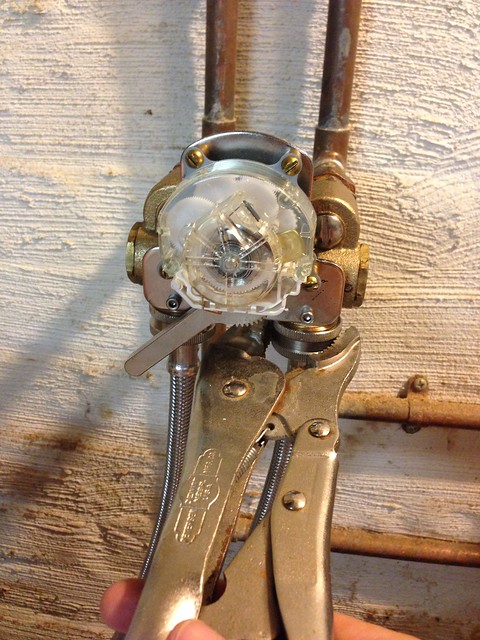
<p>Removing the plastic cover from the valve unit reveals the interior of the timing mechanism that operates the whole shebang. As you can see from the following photo, it's all spring loaded and full of gears, which means this unit requires no batteries or electrical supply to function.</p>
<p>
</p>
<div class="MediaContainer PhotoContainer"><a href="http://farm8.staticflickr.com/7444/9290604553_971757dc0e_z.jpg" rel="PhotoPopup" popupheight="640" popupwidth="480"><img alt="" src="https://farm8.staticflickr.com/7444/9290604553_971757dc0e.jpg" width="375" height="500" style="border-width: 0px; border-style: solid;"></a></div>
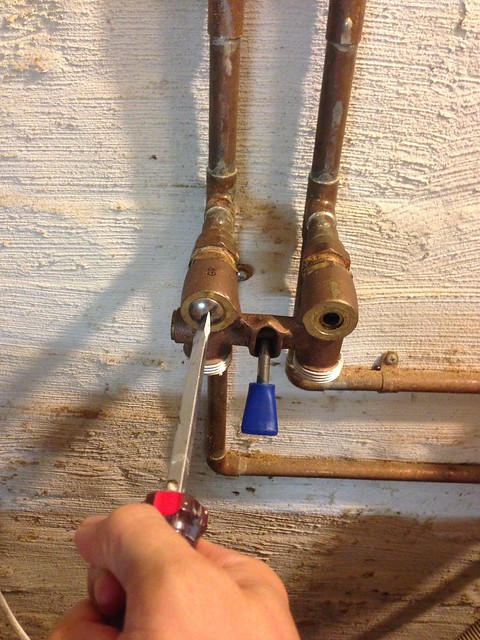
<p>To install this on our shutoff valve I had to fist turn off the supply lines downstream from the valve, then unhook the two supply lines running to the washer. Once everything basic was off and disassembled I grabbed my screwdriver and removed the two primary screws holding the valve together.</p>
<p>
</p>
<div class="MediaContainer PhotoContainer"><a href="http://farm4.staticflickr.com/3680/9293376146_af7a8cb2d4_z.jpg" rel="PhotoPopup" popupheight="640" popupwidth="480"><img alt="" src="https://farm4.staticflickr.com/3680/9293376146_af7a8cb2d4.jpg" width="375" height="500" style="border-width: 0px; border-style: solid;"></a></div>
<p>It took a little bit of convincing with the screwdriver, but I finally got the screws out. It also took quite a bit of wiggling of the valve, but I was also able to remove the valve assembly from the two stems.  </p>
<p>
</p>
<div class="MediaContainer PhotoContainer"><a href="http://farm8.staticflickr.com/7335/9290592175_430f6ece92_z.jpg" rel="PhotoPopup" popupheight="640" popupwidth="480"><img alt="" src="https://farm8.staticflickr.com/7335/9290592175_430f6ece92.jpg" width="375" height="500" style="border-width: 0px; border-style: solid;"></a></div>
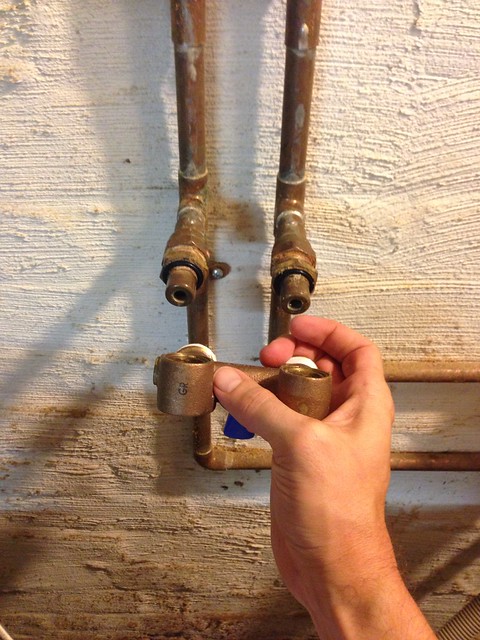
<p>The reassembly of the new valve required me to slide two rubber rings onto the valve stems, then to slide the new timer valve right onto the old valve stems. Super easy!</p>
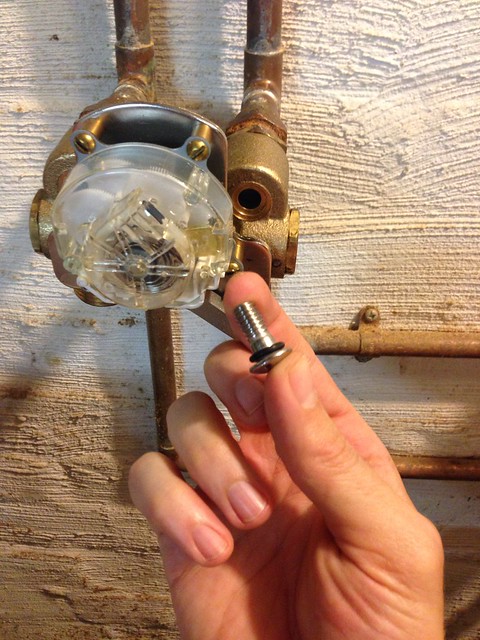
<p>I then slid two more rubber o-ring washers on some of the supplied screws and threaded them into the valve. When I tightened the screws I made extra, extra, extra sure to really tighten them down and to compress the o-rings. This is the most important part of this whole process. Without fully tightening the screws and compressing the washers you're leaving yourself open for leaks.</p>
<p>
</p>
<div class="MediaContainer PhotoContainer"><a href="http://farm8.staticflickr.com/7425/9290586419_b2cb9b0350_z.jpg" rel="PhotoPopup" popupheight="640" popupwidth="480"><img alt="" src="https://farm8.staticflickr.com/7425/9290586419_b2cb9b0350.jpg" width="375" height="500" style="border-width: 0px; border-style: solid;"></a></div>
<p>At this point I went ahead and tested out the valve's water tightness by turning the shut-off valves back on. As is customary, I repeated my plumbing juju mantra, "No drips, no runs, no errors." </p>
<p>
</p>
<div class="MediaContainer PhotoContainer"><a href="http://farm3.staticflickr.com/2894/9293359874_7d62e2b67f_z.jpg" rel="PhotoPopup" popupheight="640" popupwidth="480"><img alt="" src="https://farm3.staticflickr.com/2894/9293359874_7d62e2b67f.jpg" width="375" height="500" style="border-width: 0px; border-style: solid;"></a></div>
<p>Ta-da! The water was on and there was no evidence of any leaks.</p>
<p>
</p>
<div class="MediaContainer PhotoContainer"><a href="http://farm8.staticflickr.com/7433/9293508608_ca7fbbc7f6_z.jpg" rel="PhotoPopup" popupheight="640" popupwidth="479"><img alt="" src="https://farm8.staticflickr.com/7433/9293508608_ca7fbbc7f6.jpg" width="374" height="500" style="border-width: 0px; border-style: solid;"></a></div>
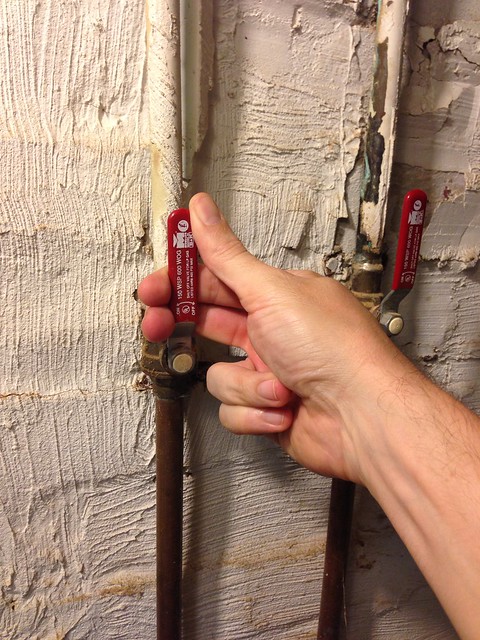
<p>Once I was satisfied water was not going to begin spraying all over the place, I had to reinstall the washing machine supply lines. I made doubly sure to reinstall the hot to the hot and the cold to the cold to be sure we didn't end up with an "incredibly shrinking clothes" laundry disaster. It's also worth noting that I had to push the little lever to the left a bit to allow for the easier install of the right supply line. This meant that I would be opening the valve, so I went ahead and shut that supply back off so I didn't end up with water everywhere. </p>
<p>
</p>
<div class="MediaContainer PhotoContainer"><a href="http://farm6.staticflickr.com/5530/9293354308_7d38566fe6_z.jpg" rel="PhotoPopup" popupheight="640" popupwidth="480"><img alt="" src="https://farm6.staticflickr.com/5530/9293354308_7d38566fe6.jpg" width="375" height="500" style="border-width: 0px; border-style: solid;"></a></div>
<p>Once all was reinstalled I pushed the little lever to the left to test out the function. I saw the hoses move a little bit, which told me the valve had opened, and I could see the gear starting to move.&nbsp;</p>
<p>
</p>
<div class="MediaContainer VideoEmbed"><iframe width="560" height="349" src="http://www.youtube.com/embed/oU9-K34BmyM?wmode=transparent&amp;hd=1" frameborder="0" allowfullscreen="true"></iframe></div>
<p>I was happy with my install, so I went ahead and snapped the plastic cover back on the front of the device and pushed the little plastic cover onto the lever. The whole thing took me only about 15 minutes to install (far less than it actually is taking to write about it), and it's given me some serious peace of mind regarding our no washing machine supply lines which are now no longer&nbsp;constantly under pressure and at risk of bursting into a gushing fountain of description at any moment. Okay, I'll tone down the sensationalism.</p>
<p>
</p>
<div class="MediaContainer PhotoContainer"><a href="http://farm6.staticflickr.com/5534/9290573159_01d901cd99_z.jpg" rel="PhotoPopup" popupheight="640" popupwidth="480"><img alt="" src="https://farm6.staticflickr.com/5534/9290573159_01d901cd99.jpg" width="375" height="500" style="border-width: 0px; border-style: solid;"></a></div>
<p>Now, when we do a wash, we just need to push the supply level to the left, which sets the timer for a max of 2-1/2 hours. Then, after the wash has completed and the timer expires, the TimeOut valve automatically closes, removing the water pressure from the supply hoses and the mechanics of the washing machine. Not a bad little device for under $75.</p>
<p>As with most home projects, products, and solutions, there are 100 different ways to go about solving this problem with washing machine flooding, and this just happens to be the solution I decided to go with. There are fully automatic solutions that involve electricity, and fully manual solutions (like the one we used to have), but I'd say our solution is a middle ground option that satisfies both a reasonable cost and a reasonable level of nuisance to ensure flood prevention. </p>
<p><em>Did you enjoy reading this post? Want to learn more about our first-hand experiences with other tools, devices or items used throughout our renovation? If so, check out&nbsp;<a href="http://www.oldtownhome.com/Toolbox-Tuesday/index.aspx">our complete list of product reviews in our Toolbox Tuesday section</a>.&nbsp;</em></p>
<p><em>Note: We weren't compensated for this review. We simply want to&nbsp;<a href="http://www.oldtownhome.com/Toolbox-Tuesday/index.aspx">share good products</a>&nbsp;when we see them, and hope that learning from our mistakes can help save you time, money and frustration.</em></p><p><a href="https://www.oldtownhome.com/2013/7/16/Toolbox-Tuesday-TimeOut-to-Prevent-a-Washing-Machine-Disaster/">Read Full Post</a></p>]]></content>
    <category term="Header Image" />
    <category term="Leaks" />
    <category term="Toolbox Tuesday" />
    <PostImage>http://farm6.staticflickr.com/5481/9290805421_bbe509b6f6.jpg</PostImage>
    <media:thumbnail url="https://farm6.staticflickr.com/5481/9290805421_bbe509b6f6_t.jpg" />
    <ExtensionElements>
      <Item>PostImage</Item>
      <Item>media:thumbnail</Item>
    </ExtensionElements>
  </entry>
  <entry>
    <guid>97e683fc-754b-4f8f-a9a0-79651208b6a9</guid>
    <id>https://www.oldtownhome.com/2013/7/10/Raining-in-the-Guest-Bedroom/</id>
    <title>Raining in the Guest Bedroom</title>
    <summary type="html"><![CDATA[<p>The life and responsibilities of a DIYer definitely do not end with working on new home projects. Maintenance and correction of home-related issues are equally if not more important in many instances, although not nearly as glamorous. This weekend was a particularly rude reminder of this simple yet often forgettable fact. But before I get into our weekend work, let me take a step back to tell you a little bit about what we were dealing with.</p><p>The guest bedroom bay window has been a bit of a pain in our sides since we bought the house back in 2003. Whether we're talking about the rotted windows, the uneven surfaces, or the fact the windows don't actually open, we've been dealing with issues related to this sad set of windows since day one. </p><p>Last week we had a run of several days with on again/off again rain and thunderstorms. This bane of a bay window actually offers some of the better views from our home when we're storm watching. About two minutes after posting this Instagram video of a thunderstorm that included lightening, wind, rain, and hail...</p><p>
</p><div class="MediaContainer VideoEmbed"><iframe width="560" height="349" src="http://www.youtube.com/embed/emei9mqBr1U?wmode=transparent&amp;hd=1" frameborder="0" allowfullscreen="true"></iframe></div><p>...I felt a drip of water on the top of my head. No, I wasn't outside, nor was I suddenly transported into our shower. This drop of water, quickly followed by at least four of its closest friends, hit me on the top of the head before I could really even process what it was I was experiencing. </p><p>"Odd," I thought, "it seems like water is coming into our house...oh wait, wait just a second...it IS coming into our house!!"</p> <a href="https://www.oldtownhome.com/2013/7/10/Raining-in-the-Guest-Bedroom/">more</a>]]></summary>
    <published>2013-07-10T09:42:00.000-04:00</published>
    <updated>2013-07-10T09:42:00.000-04:00</updated>
    <link rel="alternate" href="https://www.oldtownhome.com/2013/7/10/Raining-in-the-Guest-Bedroom/" />
    <author>
      <name>Alex</name>
    </author>
    <content type="html"><![CDATA[<p>The life and responsibilities of a DIYer definitely do not end with working on new home projects. Maintenance and correction of home-related issues are equally if not more important in many instances, although not nearly as glamorous. This weekend was a particularly rude reminder of this simple yet often forgettable fact. But before I get into our weekend work, let me take a step back to tell you a little bit about what we were dealing with.</p>
<p>The guest bedroom bay window has been a bit of a pain in our sides since we bought the house back in 2003. Whether we're talking about the rotted windows, the uneven surfaces, or the fact the windows don't actually open, we've been dealing with issues related to this sad set of windows since day one. </p>
<p>Last week we had a run of several days with on again/off again rain and thunderstorms. This bane of a bay window actually offers some of the better views from our home when we're storm watching. About two minutes after posting this Instagram video of a thunderstorm that included lightening, wind, rain, and hail...</p>
<p>
</p>
<div class="MediaContainer VideoEmbed"><iframe width="560" height="349" src="http://www.youtube.com/embed/emei9mqBr1U?wmode=transparent&amp;hd=1" frameborder="0" allowfullscreen="true"></iframe></div>
<p>...I felt a drip of water on the top of my head. No, I wasn't outside, nor was I suddenly transported into our shower. This drop of water, quickly followed by at least four of its closest friends, hit me on the top of the head before I could really even process what it was I was experiencing. </p>
<p>"Odd," I thought, "it seems like water is coming into our house...oh wait, wait just a second...it IS coming into our house!!"</p>
<p>Wendy and I were both watching the torrents of rain outside, yet we quickly sprung into action to deal with the exterior water that had somehow found its way to our interior. I guess it had missed the "No Tresspassing...and this means you, H2O!!" signs I had posted.</p>
<p>We grabbed a bucket and a large cup and strategically set up a collection station beneath the seam above our bay window where the water had been dripping. To say we were high tech in our collection methods would be...well, generous. See for yourself.</p>
<p>
</p>
<div class="MediaContainer VideoEmbed"><iframe width="560" height="349" src="http://www.youtube.com/embed/Gu6wVx9BMas?wmode=transparent&amp;hd=1" frameborder="0" allowfullscreen="true"></iframe></div>
<p>The consistent storms of the week brought more water than relief, and our bucket brigade and collection station stayed in place until we'd be able to inspect the source of the week over the weekend, when both sunny days and more free time were expected. Until I could properly correct the issue, I removed a piece of molding and drilled a relief hole at the top of the window to hopefully allow the water to drip where we wanted it to go, rather than where it wanted to go. </p>
<p>
</p>
<div class="MediaContainer PhotoContainer"><a href="http://farm3.staticflickr.com/2875/9246069068_a757b0d319_z.jpg" rel="PhotoPopup" popupheight="640" popupwidth="480"><img alt="" src="https://farm3.staticflickr.com/2875/9246069068_a757b0d319.jpg" width="375" height="500" style="border-width: 0px; border-style: solid;"></a></div>
<p>Over the next couple of days I thought about the possible source of the leak. Through my consistent over analysis I was able to build a hypothesis. Due to the location of the leak, and the fact there wasn't an obvious errant trickle of water during the rains, I figured the water must be entering through a point on our roof, rather then through a backed up gutter or otherwise compromised element of our structure. </p>
<p>My suspicions were confirmed when I set up the ladder and climbed onto our upper roof. As soon as I found myself atop our home and overlooking the majestic scenery of Old Town Alexandria, I also saw our leak culprit.</p>
<p>
</p>
<div class="MediaContainer PhotoContainer"><a href="http://farm3.staticflickr.com/2888/9245710056_e7d9e7d8f1_z.jpg" rel="PhotoPopup" popupheight="480" popupwidth="640"><img alt="" src="https://farm3.staticflickr.com/2888/9245710056_e7d9e7d8f1.jpg" width="500" height="375" style="border-width: 0px; border-style: solid;"></a></div>
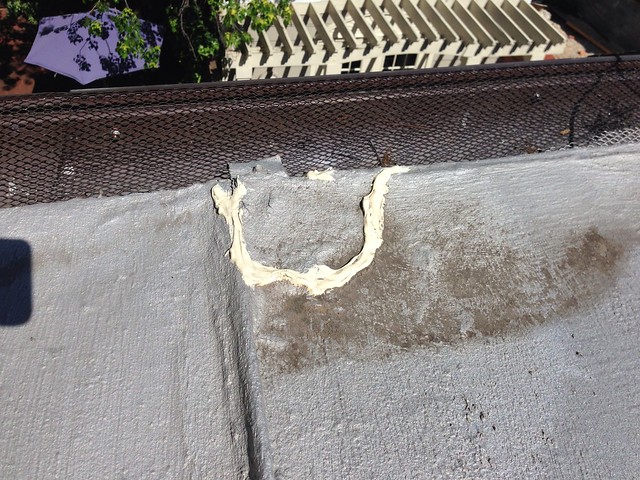
<p>Do you see what I see? It looks like someone caulked our roof for us. I say "someone" because it definitely wasn't me. The last time I was on our roof I was painting the roof patch around our skylight, and this caulk wasn't there. I think a neighbor probably had a roofer working and they decided to take a field trip onto other neighbors' roofs. They probably thought they were doing us a favor by patching up a failed section of our roofing. The problem is that this patch job was not done properly and didn't correct the primary issue, it was only a temporary fix. As soon as the caulk failed, it began letting water into a problem area. </p>
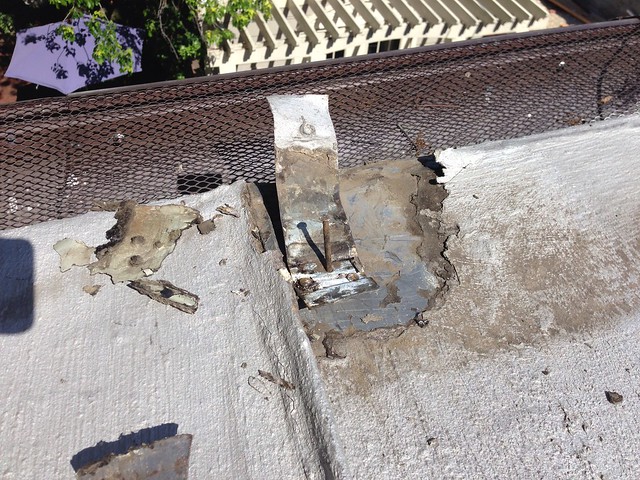
<p>I started scraping the caulk away only to reveal the primary issue that was causing our bay window to resemble a rain shower head. It seems someone, at some point, many years ago, maybe 25 years or more, nailed a piece of tin directly through our roof.</p>
<p>
</p>
<div class="MediaContainer PhotoContainer"><a href="http://farm8.staticflickr.com/7432/9245708912_31ed1c11e9_z.jpg" rel="PhotoPopup" popupheight="480" popupwidth="640"><img alt="" src="https://farm8.staticflickr.com/7432/9245708912_31ed1c11e9.jpg" width="500" height="375" style="border-width: 0px; border-style: solid;"></a></div>
<p><em>There was actually a roofer working two houses over from us who was giving me odd looks because I kept taking photos of the work I was doing. Apparently he doesn't have a blog...</em></p>
<p>Now I can't claim to read minds, but I'm going to go out on a limb and say that the mind of the person who did this had something on his mind other than doing a good job. Most likely, he was probably thinking more about shiny things and how 2 + 2 might equal 9 but he's just not sure. In other words, m-o-r-o-n! </p>
<p>Who nails through a metal roof? Seriously? Seriously?</p>
<p>A poorly applied tar patch, placed over paint and without any fabric to hold it all together ultimately doomed this portion of our roof to leak always and forever...until we came along to fix it. </p>
<p>After scraping away the thick tar and paint I stared at the piece of metal and it taunted and provoked me as it stared back at me from our roof. Disgusted with this little piece of metal's mere existence, I removed it and the three rusted nail friends it was hanging out with. They were uninvited guests in our home, and I was the night club bouncer telling them they'd had enough and it was time to move on. However, their expulsion revealed the true number that had been done on our roof in the way of additional holes. These holes, which were probably made at the same time as the tin strip was applied, were simply allowing water that evaded the caulk barrier to pour right into our home each and every time it rained. Oh, the horror!!!</p>
<p>
</p>
<div class="MediaContainer PhotoContainer"><a href="http://farm3.staticflickr.com/2868/9245707630_9ce7fb7e04_z.jpg" rel="PhotoPopup" popupheight="480" popupwidth="640"><img alt="" src="https://farm3.staticflickr.com/2868/9245707630_9ce7fb7e04.jpg" width="500" height="375" style="border-width: 0px; border-style: solid;"></a></div>
<p>But have no fear. Now that I knew the root cause of our leak, fixing it was pretty straight forward. First, I shot the holes nice and full of a 100% silicone outdoor caulk. The point is to back fill the holes, not to seal them with caulk. This makes a final barrier and keeps moisture or other items from attacking our patch from the underside of the roof through the holes.</p>
<p>The cure for the caulk required a tad bit of downtime. Rather than getting down from the reflective roof on this glorious 95 degree day, I opted to enjoy the spectacular views of Alexandria our roof has to offer.</p>
<p>
</p>
<div class="MediaContainer PhotoContainer"><a href="http://farm6.staticflickr.com/5515/9242923127_6a7a1ba64e_z.jpg" rel="PhotoPopup" popupheight="480" popupwidth="640"><img alt="" src="https://farm6.staticflickr.com/5515/9242923127_6a7a1ba64e.jpg" width="500" height="375" style="border-width: 0px; border-style: solid;"></a></div>
<p>I also daydreamed about the possibility of building a roof deck. Sure, it would require cooperation from neighbors, a city variance, tons of structural work, and an upheaval of our life I can't begin to fathom, but it would be absolutely awesome, and totally worth it, I'm sure!</p>
<p>Okay, back to reality. </p>
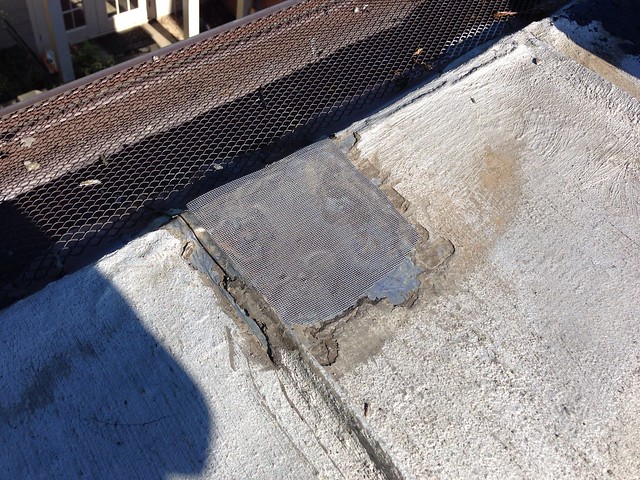
<p>Once allowing adequate cure time, I thoroughly cleaned the area of the roof that will receive the patch, chipping away any loose paint, tar, or debris. The goal is to give myself a good and clean surface to work with, otherwise we'll end up on the exact same situation in a few months. Once clean, I cut myself a piece of fiberglass patch that will sit over the sensitive area. </p>
<p>
</p>
<div class="MediaContainer PhotoContainer"><a href="http://farm8.staticflickr.com/7302/9245702396_7c4192faf9_z.jpg" rel="PhotoPopup" popupheight="480" popupwidth="640"><img alt="" src="https://farm8.staticflickr.com/7302/9245702396_7c4192faf9.jpg" width="500" height="375" style="border-width: 0px; border-style: solid;"></a></div>
<p>The fiberglass will give my patch the structure it needs to avoid cracking or failure when the roof expands and contracts in the varying temperatures of the seasons. I then applied an elastic tar-like roof coating over the newly exposed metal roofing, thus embedding the fiberglass patch into the material.</p>
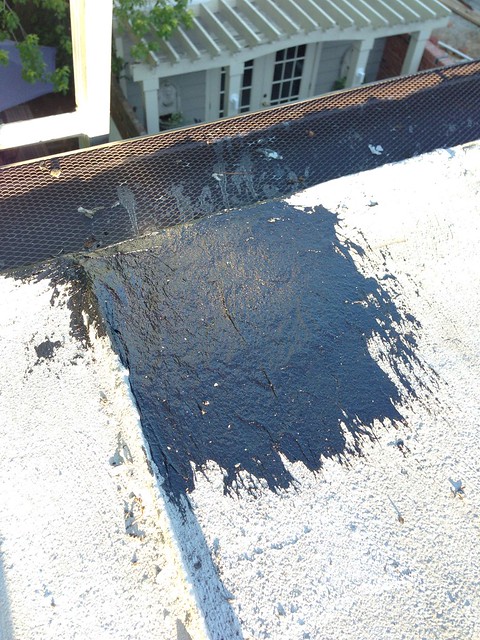
<p>A final coat of roofing cement makes a water tight seal that will keep rain from finding its way under the patch and into our house. If this roofing cement's noxious smell is any indication of its quality and longevity, it should last for a good long time.&nbsp;</p>
<p>
</p>
<div class="MediaContainer PhotoContainer"><a href="http://farm4.staticflickr.com/3691/9245700036_955deae420_z.jpg" rel="PhotoPopup" popupheight="640" popupwidth="480"><img alt="" src="https://farm4.staticflickr.com/3691/9245700036_955deae420.jpg" width="375" height="500" style="border-width: 0px; border-style: solid;"></a><br>
<em>This photo is actually of another patch. I just realized I didn't take a final photo of the first area I was working on, but you get the idea.</em></div>
<p>There are a lot of products on the market that can work in this scenario, but it's important to understand what will and won't work for your roofing surface. Our standing seam zinc roof is somewhat unique and requires specific surface prep or compounds to ensure adhesion. The ideal solution is actually a soldered on patch, but the location of these holes makes affixing a patch extremely difficult. So I opted for this flexible tar-like patch since I could apply it directly to the roof's surface.</p>
<p>The approach I'm using, along with normal maintenance and painting with a reflective coating (after full cure and when I paint the whole roof) will keep this part of our house dry for the life of the roof. </p>
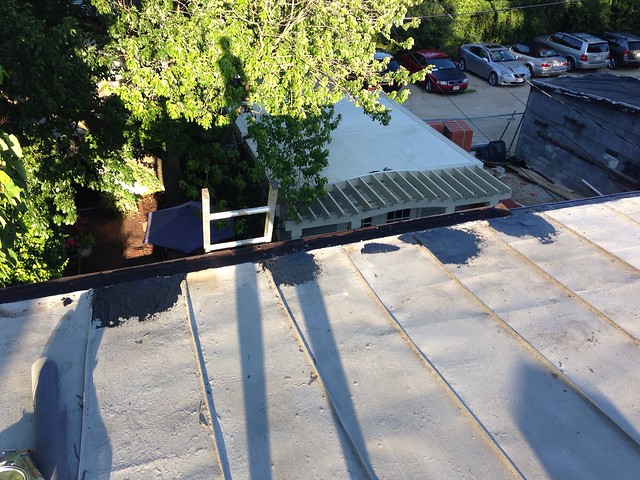
<p>While I was on the roof and correcting the main issue, I also looked at several other suspect areas I knew would ultimately end up with the same fate as our initial problem area. I went ahead and did the same removal, cleaning, and repair on these sections as well. It's my hope that an ounce of prevention is worth a pound of cure, and we won't end up with water streaming down the inside of our walls anytime soon based on my corrections. </p>
<p>
</p>
<div class="MediaContainer PhotoContainer"><a href="http://farm3.staticflickr.com/2851/9242917927_8739165366_z.jpg" rel="PhotoPopup" popupheight="480" popupwidth="640"><img alt="" src="https://farm3.staticflickr.com/2851/9242917927_8739165366.jpg" width="500" height="375" style="border-width: 0px; border-style: solid;"></a></div>
<p>I'll need to let these patches cure for a little while before applying the next coat of roof paint, but our entire roof needs a coat of paint, so I'll probably be talking about that in the next month or so. I'll need to make sure I get to it before fall arrives. There's nothing worse than seeing your hard work covered by a layer of colorful fallen leaves before the paint can actually dry. </p>
<p>Are you dealing with any leak issues in your home? Have you ever had a good Samaritan "fix" a problem with your house, only to realize that they aided in making the problem worse? I'd love to hear your experiences.</p><p><a href="https://www.oldtownhome.com/2013/7/10/Raining-in-the-Guest-Bedroom/">Read Full Post</a></p>]]></content>
    <category term="Header Image" />
    <category term="Leaks" />
    <category term="Projects:Home Improvement" />
    <category term="Roof" />
    <PostImage>http://farm8.staticflickr.com/7286/9223709439_d4068e5c6a.jpg</PostImage>
    <media:thumbnail url="https://farm8.staticflickr.com/7286/9223709439_d4068e5c6a_t.jpg" />
    <ExtensionElements>
      <Item>PostImage</Item>
      <Item>media:thumbnail</Item>
    </ExtensionElements>
  </entry>
  <entry>
    <guid>874139af-7f71-4dd1-a2c8-3eb78e6eaa9a</guid>
    <id>https://www.oldtownhome.com/2012/8/2/Youve-Got-to-Be-Freakin-Kidding-Me/</id>
    <title>You've Got to Be Freakin' Kidding Me</title>
    <summary type="html"><![CDATA[<p>As in most humid climates, the Washington, DC area is subject to rather unexpected but severe summer thunderstorms, and this week was no exception. Over the last few days we've had thunder, lightening, and driving rain pop up out of nowhere (well, nowhere if you're not checking the weather anyway). Last night Alex was working late, and I was puttering around the house putting a few last things away from my <a href="http://www.oldtownhome.com/2012/7/30/Im-Ba-ack/index.aspx">business trip to Boston</a>.</p><p>The wicker storage cubes next to the bed in our guest bedroom are the home to our travel toiletries, including the little shampoos and lotions I've gladly accepted from hotels over the years, along with my travel sized makeup bags.&nbsp;</p><p>
</p><div class="MediaContainer PhotoContainer"><a href="http://farm8.staticflickr.com/7015/6534283115_fdb61ec712_z.jpg" rel="PhotoPopup" popupheight="427" popupwidth="640"><img alt="" src="https://farm8.staticflickr.com/7015/6534283115_fdb61ec712.jpg" width="500" height="333" style="border-width: 0px; border-style: solid;"></a></div><p>When I walked between the bed and the window to return these items to their storage location, I had the unfortunate realization that the wood floor was wet. Thanks to my bare feet, something I may not have noticed in the dim light had it not been made blatantly apparent.</p><p>My first thought was that Mel had started peeing on the floor, either in protest of my trip or Lulu's permanent resident status in our home, or that at his ripe old age of 12 was no longer able to hold it. Upon further inspection, I realized the water was dripping in from the top of our bay window, had soaked our throw pillows, saturated the bamboo blinds and rug, and most destructively, had seeped into the heart pine floors.</p><p>
</p> <a href="https://www.oldtownhome.com/2012/8/2/Youve-Got-to-Be-Freakin-Kidding-Me/">more</a>]]></summary>
    <published>2012-08-02T11:33:00.000-04:00</published>
    <updated>2012-08-02T11:33:00.000-04:00</updated>
    <link rel="alternate" href="https://www.oldtownhome.com/2012/8/2/Youve-Got-to-Be-Freakin-Kidding-Me/" />
    <author>
      <name>Wendy</name>
    </author>
    <content type="html"><![CDATA[<p>As in most humid climates, the Washington, DC area is subject to rather unexpected but severe summer thunderstorms, and this week was no exception. Over the last few days we've had thunder, lightening, and driving rain pop up out of nowhere (well, nowhere if you're not checking the weather anyway). Last night Alex was working late, and I was puttering around the house putting a few last things away from my <a href="http://www.oldtownhome.com/2012/7/30/Im-Ba-ack/index.aspx">business trip to Boston</a>.</p>
<p>The wicker storage cubes next to the bed in our guest bedroom are the home to our travel toiletries, including the little shampoos and lotions I've gladly accepted from hotels over the years, along with my travel sized makeup bags.&nbsp;</p>
<p>
</p>
<div class="MediaContainer PhotoContainer"><a href="http://farm8.staticflickr.com/7015/6534283115_fdb61ec712_z.jpg" rel="PhotoPopup" popupheight="427" popupwidth="640"><img alt="" src="https://farm8.staticflickr.com/7015/6534283115_fdb61ec712.jpg" width="500" height="333" style="border-width: 0px; border-style: solid;"></a></div>
<p>When I walked between the bed and the window to return these items to their storage location, I had the unfortunate realization that the wood floor was wet. Thanks to my bare feet, something I may not have noticed in the dim light had it not been made blatantly apparent.</p>
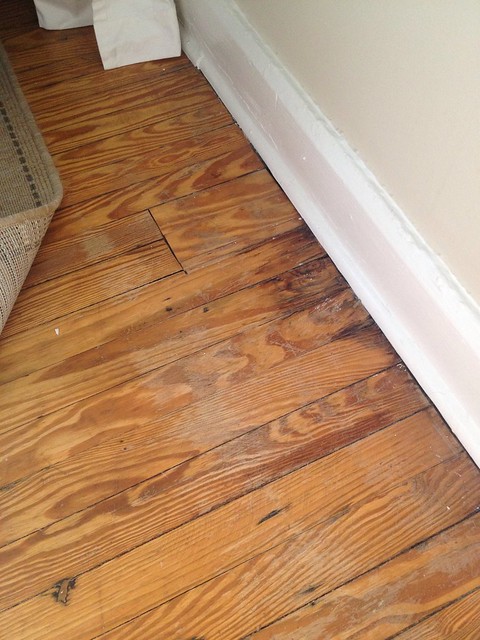
<p>My first thought was that Mel had started peeing on the floor, either in protest of my trip or Lulu's permanent resident status in our home, or that at his ripe old age of 12 was no longer able to hold it. Upon further inspection, I realized the water was dripping in from the top of our bay window, had soaked our throw pillows, saturated the bamboo blinds and rug, and most destructively, had seeped into the heart pine floors.</p>
<p>
</p>
<div class="MediaContainer PhotoContainer"><a href="http://farm9.staticflickr.com/8016/7697832226_fb81ea595f_z.jpg" rel="PhotoPopup" popupheight="640" popupwidth="480"><img alt="" src="https://farm9.staticflickr.com/8016/7697832226_fb81ea595f.jpg" width="375" height="500" style="border-width: 0px; border-style: solid;"></a></div>
<p>The floors were so water logged in this area that the poly had actually peeled up from the boards. (As is evident by the lighter areas in the above photo.) I immediately called Alex at work. I'd like to be able to tell you the call went like this:</p>
<p><strong>Wendy</strong>: <em>In a calm, even tone...</em></p>
<p><em>"Hi Honey. We had a bit of a rain shower here, and I've noticed the slightest bit of moisture near the bay window in our guest bedroom. Do you think you might be home sometime in the next few hours so we can take a look at it together?"</em></p>
<p>In reality, it was more like this:</p>
<p><strong>Wendy</strong>: <em>In a frantic, borderline hysterical tone that may have been verging on tears...</em></p>
<p><em>"Where are you?? It is almost nine o'clock! We had a huge storm, and water has poured in through the bay window destroying the original heart pine floors. They're now black with damage, and we have no chance of saving them. Not to mention the curtains, blinds, pillows, and rug are so wet we'll probably need to throw them in the trash. Get home now!!!"</em></p>
<p>When Alex did return home roughly 20 minutes later, his assessment was a bit different than mine. Yes, it does appear we have a leak, but we think we've been able to pinpoint the location. In the meantime, we've been working to dry out the rug and floor, and have some curtain and pillowcase washing to do.&nbsp;</p>
<p>
</p>
<div class="MediaContainer PhotoContainer"><a href="http://farm9.staticflickr.com/8010/7697827996_4e8caefd9f_z.jpg" rel="PhotoPopup" popupheight="640" popupwidth="480"><img alt="" src="https://farm9.staticflickr.com/8010/7697827996_4e8caefd9f.jpg" width="375" height="500" style="border-width: 0px; border-style: solid;"></a></div>
<p>So now the $64,000 question: how is the water getting into the top of the bay window? We're going to need to do a little inspection from the outside to hopefully determine the source of the leak, but Alex seems confident we can knock it out. Hopefully this is a sooner rather than later task that we can bump up our priority list. I'd say it's important.</p>
<p>Don't get me wrong, even with the more mild damage assessment I'm not happy about it. Adding this project to our lengthy to do list isn't my idea of fun, and it just means one more thing to fix before we work on the master bathroom. &lt;sigh&gt; Any bets on if we'll finish the bathroom by 2013?</p><p><a href="https://www.oldtownhome.com/2012/8/2/Youve-Got-to-Be-Freakin-Kidding-Me/">Read Full Post</a></p>]]></content>
    <category term="Guest Room" />
    <category term="Header Image" />
    <category term="Leaks" />
    <PostImage>http://farm8.staticflickr.com/7256/7698439466_9d6d0b9366.jpg</PostImage>
    <media:thumbnail url="https://farm8.staticflickr.com/7256/7698439466_9d6d0b9366_t.jpg" />
    <ExtensionElements>
      <Item>PostImage</Item>
      <Item>media:thumbnail</Item>
    </ExtensionElements>
  </entry>
</feed>